Christian Pilgrim Ogier d’Anglure Writes of Yellow Kerchiefs for Jews in the Land of Israel
Dhimmi laws, which required non-Muslims to wear clothing that distinguished them in status from Muslims, were initiated by the Abbasid Caliphate under Al-Mutawakkil in 850 CE.
In his book Le Saint Voyage de Jerusalem [The Holy Voyage to Jerusalem], written in 1395 CE – Ogier d’Anglure writes the distinctive clothing he noticed during his pilgrimage to the Holy Land.
Under Mamluk rule, he explains how different religious groups could be visually identified, noting that Muslims wore white linen kerchiefs, Christians a bluish Persian cloth kerchief and Jews a yellow cloth kerchief.
“The Jews are recognized by the kerchief of cloth dyed yellow that they wear on their heads.”
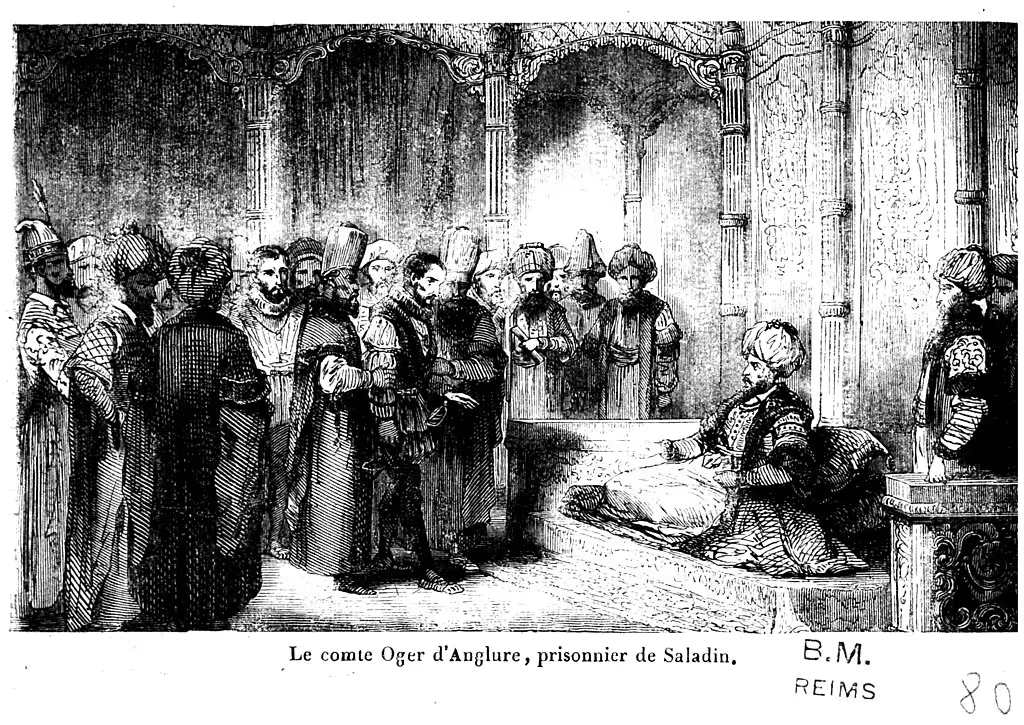
The Count Ogier d’Anglure, prisoner of Saladin, 1395 CE
Saladin lived in the 12th century. Due to medieval naming habits and literary conventions, By the 14th–15th centuries, Saladin was used generically by European writers to mean the sultan of Egypt, or a powerful Muslim ruler in the eastern Mediterranean
Credit: inconnu. Versement et modifications par G.Garitan, Public domain, via Wikimedia Commons
Image: Public Domain - Municipal Library of Reims

Aperçu
In Jerusalem, members of different communities lived side by side. Ogier d’Anglure wrote:
“…One can tell the Saracenes (Muslims) because they wear a white linen kerchief on their heads; …the Christians of the Girdle are known by the fact that they wear a kerchief made of colored stuff (bluish) from Persia; the Jews are recognized by the kerchief of cloth dyed yellow that they wear on their heads...”
Source: “The Holy Voyage to Jerusalem of Ogier d’Anglure,” 1395, displayed at David’s Citadel
Dans la Bible

Leçons de vie

Humor

Advocacy

Fun fact

Antisimetism


