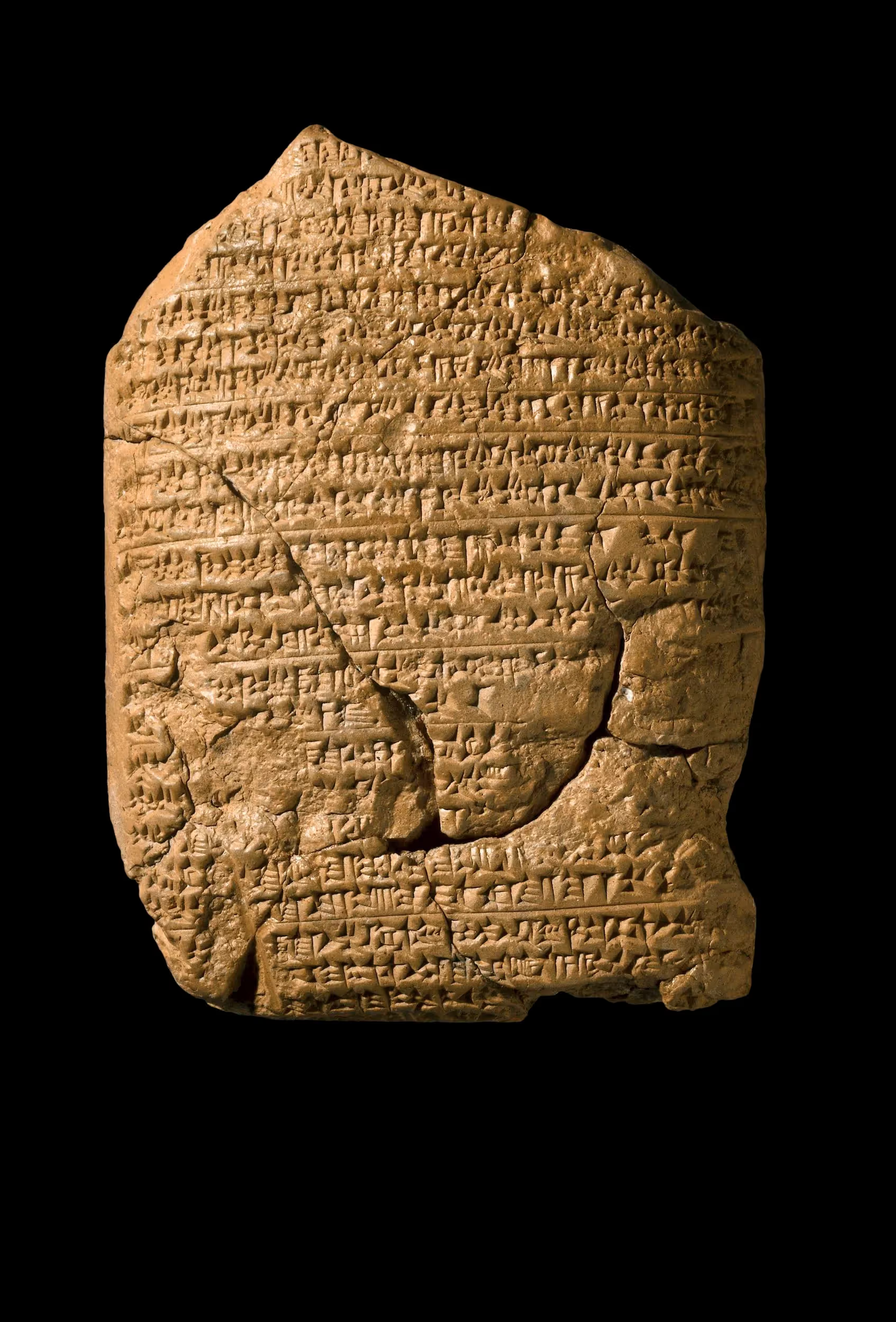
The Fast of the Tenth of Tevet
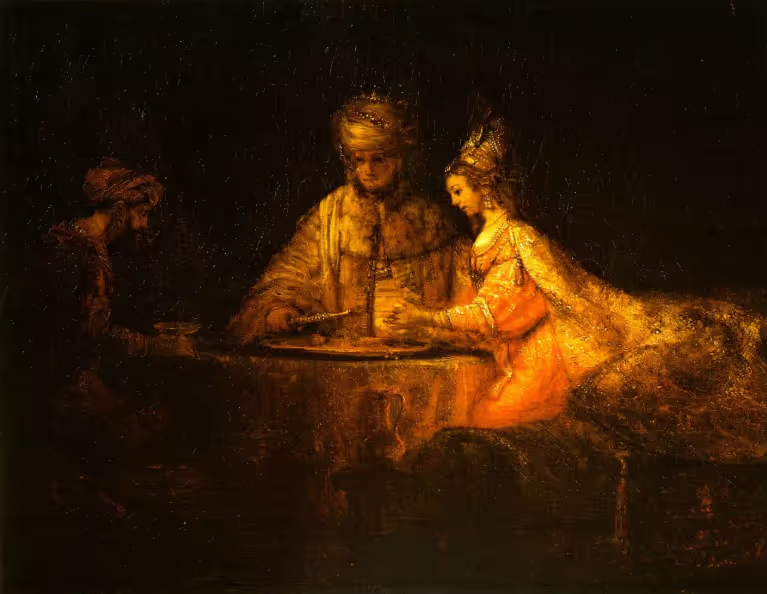
The Jewish month of Tevet always falls in the dark, rainy days of winter. The Book of Esther (2:16) mentions the month of Tevet and marks the time when Esther was taken to King Ahasuerus, after a year of preparation in the harem.
See where the story of Esther and Purim falls in our Biblical Timeline HERE
Jewish tradition also marks the first of Tevet as the birthday of Abraham.
And it was in the night that Abram was born, that all the servants of Terah, and all the wise men of Nimrod, and his conjurors came and ate and drank in the house of Terah, and they rejoiced with him on that night.
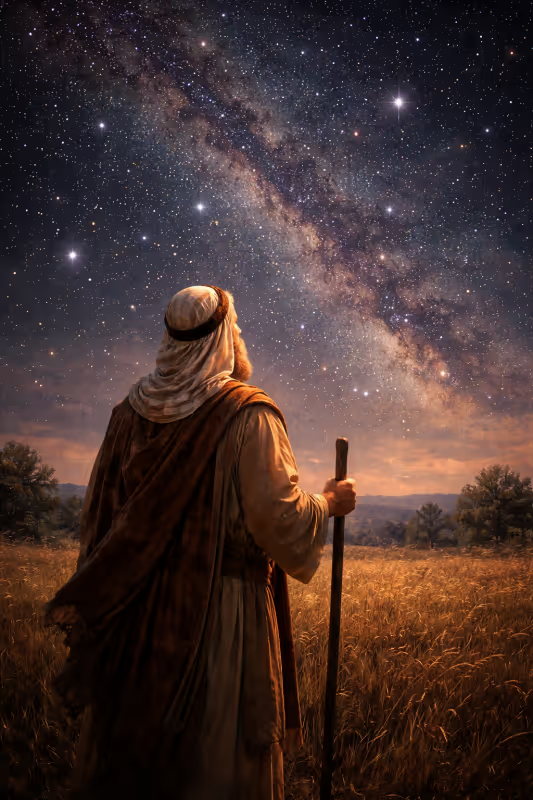
And when all the wise men and conjurors went out from the house of Terah, they lifted up their eyes toward heaven that night to look at the stars, and they saw, and behold, one very large star came from the east and ran in the heavens, and he swallowed up the four stars from the four sides of the heavens.
Sefer HaYashar* 8:1-2 (The Book of Yashar is mentioned in Joshua 10:13 and 2 Sam 1:18)
Read more about the land of Canaan in the times of the Patriarchs HERE
Light and Remedy in the Darkest Hour
In the dark days of Tevet, strong Jewish characters brought light into the world, turning darkness to light, just as the eight days of Hanukkah also end in the month of Tevet.
The sages teach that, according to the book of Esther, G-d always creates the cure before the disease. Before the Jewish people faced annihilation in Persia, G-d already put dynamics in place to prevent what seemed to be the inevitable.
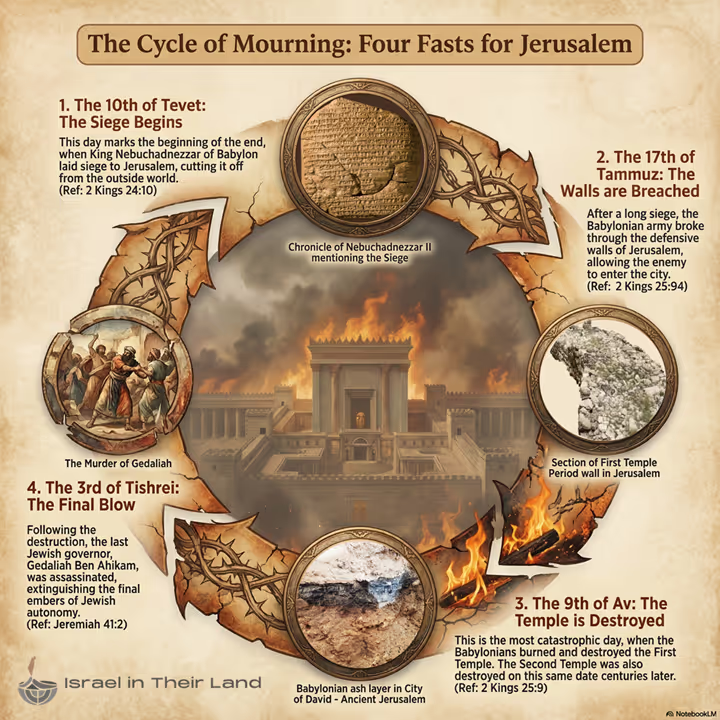
This dynamic is very important as sadly, the month of Tevet also kicks off the Destruction cycle that has been accompanied by four fasts instituted by the sages. These fasts are mentioned chapter 7 and 8 of the Book of Zechariah.
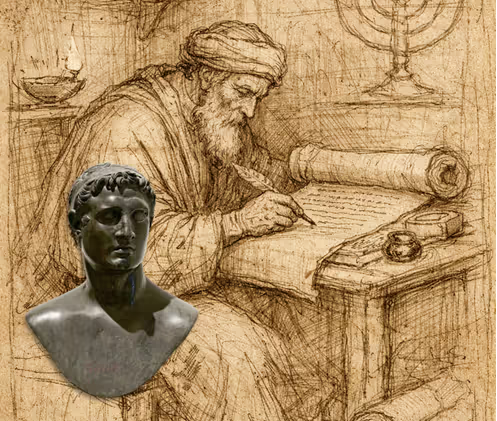
The fast of the 10th of Tevet is however preluded by two minor fasts on the 8th and th 9th of Tevet. The 8th of Tevet marks the translation of the Torah (five book of Moses) into Greek.
But why do we fast? The Hebrew language is multi-layered with every letter having its own intrinsic value. Put together in words and sentences, a multi-dimensional world is created, referred to as the PARDES. Translating the Torah from Hebrew to Greek would be equivalent to taking the universe with its most intricate, interconnected multi-dimensional dynamics, from the wonderous galaxies to the delicate microscopic life-giving cells, from the most colorful, beautiful flowers to the majestic, fortified mountains, and squashing it into a flat line.
72 scholars finished the task 72 days. You can read more about the translation HERE and HERE.
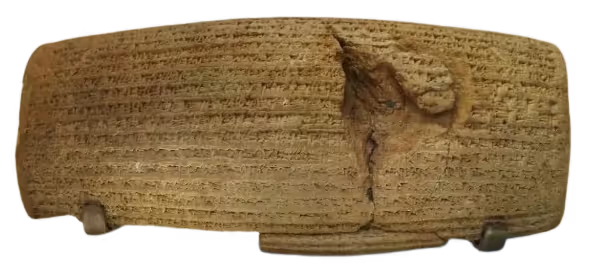
On the 9th of Tevet, we commemorate the deaths of both Ezra the Scribe and Nehemiah the Governor. Both key figures in the Return to Zion were escorting those Jews who wished to return to Israel after the Babylonian Exile.
Read more about it at the end of the 6th century BCE and during the 5th century BCE
The Fast of the 10 of Tevet
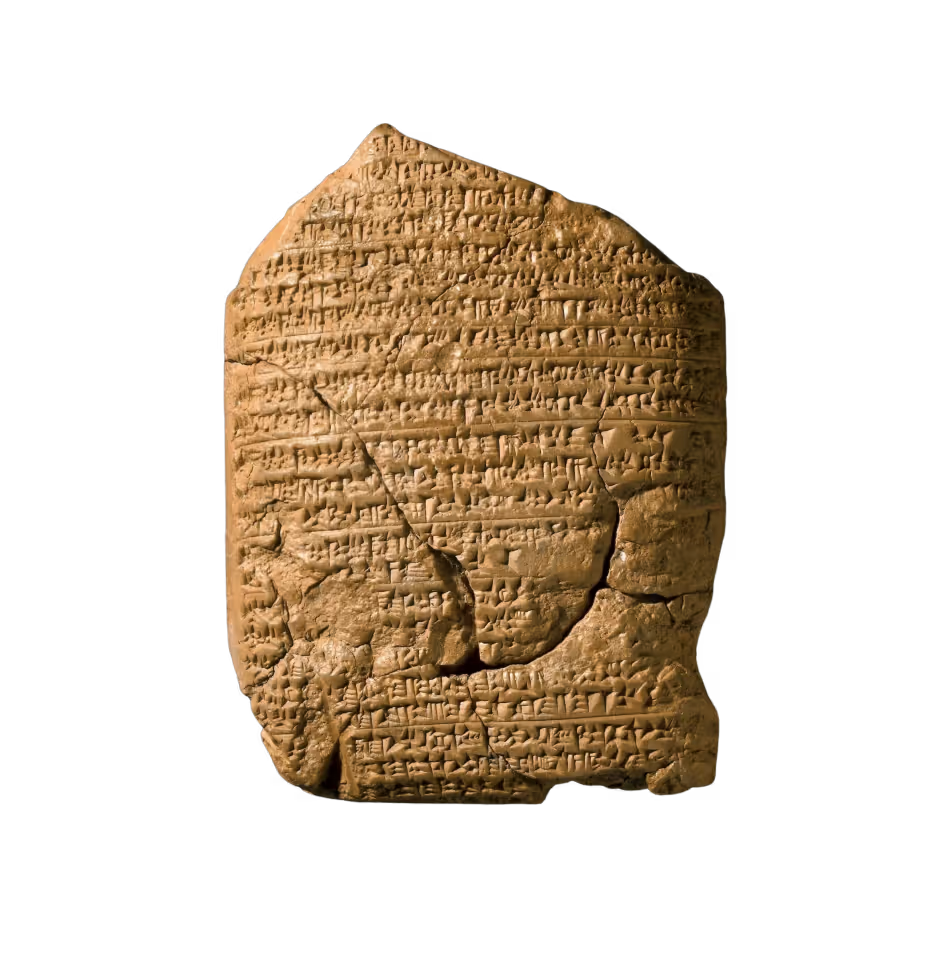
The 10th of Tevet marks the beginning of the cycle that led to the burning of the First Temple. The Babylonian exile progressed in phases. First, only the influential and high-profile Jews were exiled, allowing the lower classes to maintain the Land under Babylonian rule. But as the rebellions continued, Nebuchadnezzar understood that the only way to break the Jewish spirit was to go for the core of Jewish life, the Temple, the seat of the Torah. The Tablets with the 10-Commandment and a Torah scroll were kept inside the Ark of the Covenant, seated within the Holy of Holies.
"And it came to pass in the ninth year of his reign, in the tenth month, in the tenth day of the month, that Nebuchadnezzar king of Babylon came, he and all his army, against Jerusalem, and encamped against it; and they built forts against it round about."
2 Kings 25:1
It took 2,5 years after the siege for the Babylonians to break through the walls on the 17th of Tammuz, the next fast in the cycle. Tammuz is the fourth month counting from Nissan. Then, in the fifth month, the month of Av, the Temple was destroyed.
Explore the 6th century BCE with the events that led up to the Temple destruction and Exile to Babylon HERE
The cycle finishes with the murder of the last governor of Israel, Gedalyah, son of Ahikam, known as the fast of Gedalyah on the 3rd of Tishrei.
The Prophet Zechariah states that in the future these fasts will turn in to festivals. May we hear only Good News!
'Thus says the L-RD of hosts: The fast of the fourth month, and the fast of the fifth, and the fast of the seventh, and the fast of the tenth, shall be to the house of Judah joy and gladness, and cheerful seasons; therefore love truth and peace.'
Zecheriah 8:19