The Spanish Inquisition and Expulsion
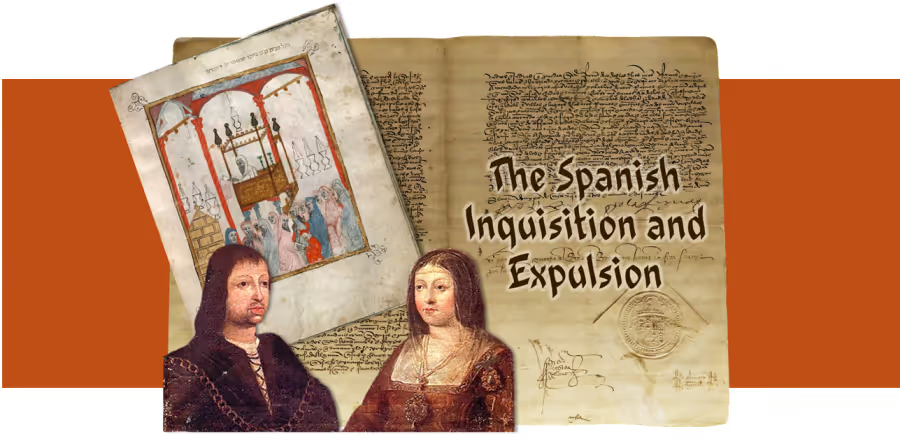
The Spanish Inquisition was a powerful religious tribunal established in 1478 CE, authorized by Pope Sixtus IV at the request of Ferdinand II of Aragon and Isabella I of Castile.
Its main purpose was to investigate converted Christians suspected of secretly practicing their former religions, including Jews, Muslims, and Protestants.
Jews who converted to Christianity were called conversos (converts) or moranos (pigs). Among the Jews who converted, some relinquished their faith to live normal lives and thrive economically and politically. The majority of the converts, however, did so in order to escape persecution. A small number of Jews stood tall, refusing to convert. These Jews were placed into Jewries (ghettos) laid with heavy taxes.
A Marriage to End Muslim Rule

Ferdinand V of Aragon married Isabella I of Castile in an effort to unite the Spanish provinces against Muslim rule that lasted 800 years.
History Repeating Itself in Undeniable Patterns:
Pattern #1: Jewish Converts to Christianity become the worst accusers of the Jews
On November 1st, 1478 CE, Pope Sixtus IV issued a Papal Bull, or formal decree, called Exigit Sincere Devotionis, a document authorizing the persecution of those believed to be secretly practicing a faith contrary to the Roman Catholic Church. Bul comes from the Latin word bulla, meaning “seal.”
Ironically, the decree did not include any other religion or people group other than the Jews.
The decree was enforced, but only gained traction when Tomas de Troquemada, a Dominican monk, was appointed as Grand Inquisitor in 1483 CE. Torquemada was of Jewish descent. As seen throughout history, Jews who gave in and defected to the ruling powers of the time, became the worst enemies of Jewish people, including Troquemada's peer, Antonio, a Jewish apostate formally known as Levi ben Shem-Tov and personal physician to King Manuel of Portugal, who advised and influenced the king to forcibly convert Jews and baptise all Jewish babies in the late 15th century, as well as Pablo Christiani, a Jewish apostate who led and lost the debate against Nachmanides in 1263 CE in Spain, and Josephus Flavius, a Kohen (Jewish priest) who defected to the Romans and accompanied and advised Titus in his destruction campaign against Jerusalem to name a few.
The Inquisition mainly targeted Jews who converted to Christianity but were suspected of secretly still leading a Jewish lifestyle. These Jews were accused, arrested, and tortured until they confessed. After their confession, they were burned at the stake.
The Inquisition lasted till 1834.
Pattern #2: Jewish Assets Confiscated to Finance War
The Edict of Expulsion: In 1492 CE, Ferdinand and Isabella, due to an expensive war against the Muslims, decided to expel the Jews in order to confiscate their wealth and property. It follows the same pattern that happened over a century before that, when King Philip IV of France expelled the Jews from France, seizing their property, real estate, and assets in order to replenish his treasuries after a costly war in Flanders.
Pattern #3: Indiscriminate Persecution – a Jew is a Jew
The edict, also called the Alhambra Decree, was named after a large palace-fortress complex in Granada, where the decree was signed shortly after the fall of Granada, the last Muslim stronghold in Spain. The edict sought to expel all Jews from Spain, not only those who never converted to Christianity. Again, a stark pattern, whether a Jew converted or not, they were persecuted purely for being Jewish, as seen during Nazi Germany, when Jews, whether they lived a Jewish lifestyle or prioritized their German citizenship above their Jewish heritage, were all rounded up to the gas chambers.
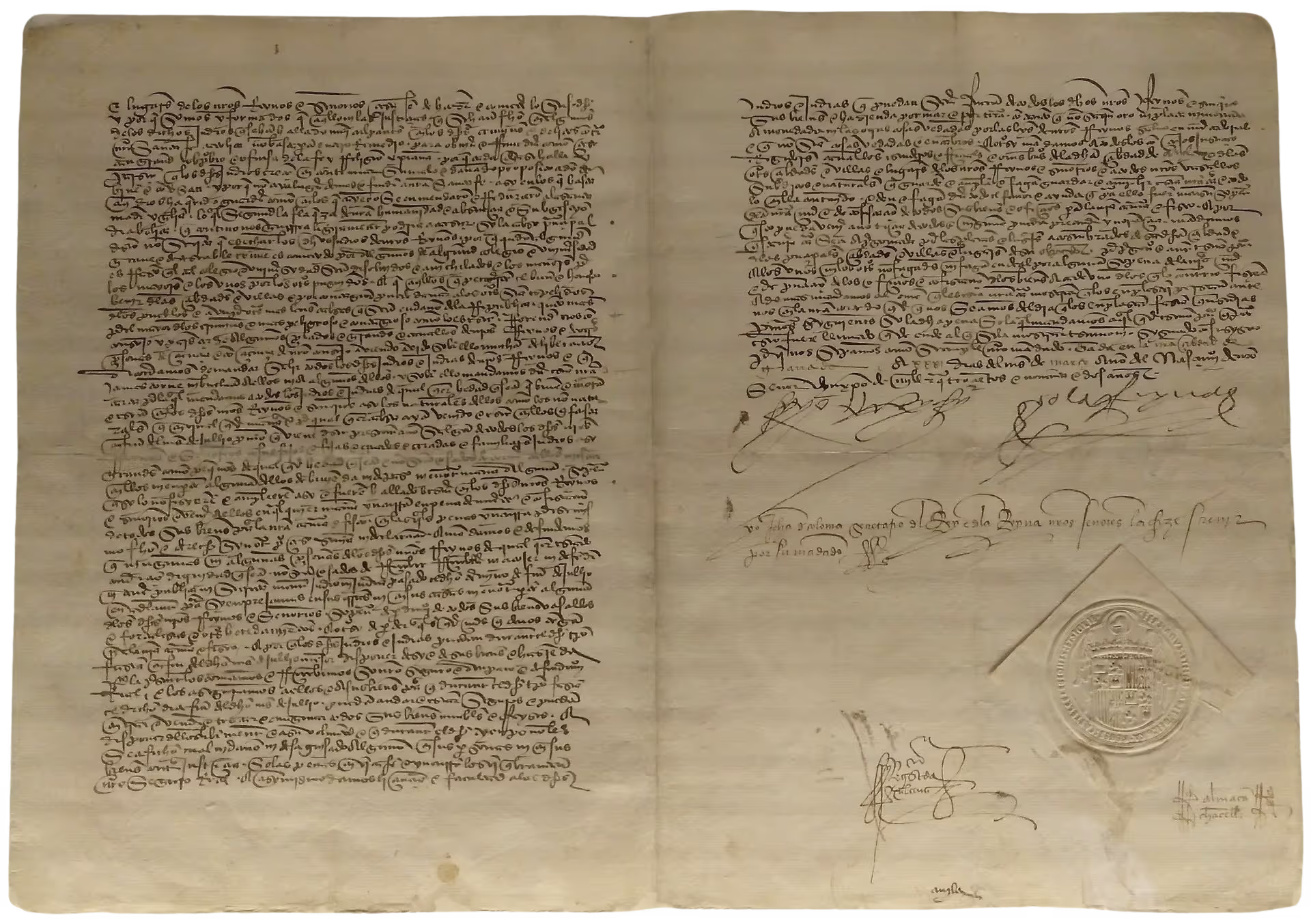
Excerpts from the Edict:
“You know well or ought to know, that whereas we have been informed that in these our kingdoms there were some wicked Christians who “Judaized” and apostatized from our holy Catholic faith, the great cause of which was interaction between the Jews and these Christians…”
“Notwithstanding that we were informed of the great part of this before now and we knew that the true remedy for all these injuries and inconveniences was to prohibit all interaction between the said Jews and Christians and banish them from all our kingdoms…”
“Therefore, we, with the counsel and advice of prelates, great noblemen of our kingdoms, and other persons of learning and wisdom of our Council, having taken deliberation about this matter, resolve to order the said Jews and Jewesses of our kingdoms to depart and never to return…”
“…until the end of the said month of July… we likewise give license and faculty to those said Jews and Jewesses that they be able to export their goods and estates out of these our said kingdoms and lordships by sea or land as long as they do not export gold or silver or coined money…”
Link to full translation of decree
Pattern #4: Tisha B’Av
The Edict of Expulsion was signed on March 31, 1492. Jews were given four months to leave Spain as the expulsion came into effect at the end of July 1492 CE. Then came another undeniable phenomenon, marked throughout Jewish history. The edict was pushed off for three days by Torquemada, to August 2, 1492 CE, coinciding with Tisha b’Av (ink to , the same date on which both Temples burned down, the English, 1290 CE, and French Expulsions, 1306 CE, happened, and when the Final Solution during the Holocuast was approved and signed, centuries later. For a full list of tragic events that happened on Tisha B’Av, click here
Pattern #5: A Nation Bankrupt
• Spain, one of the wealthiest countries in the world, was bankrupt within the century of the expulsion.
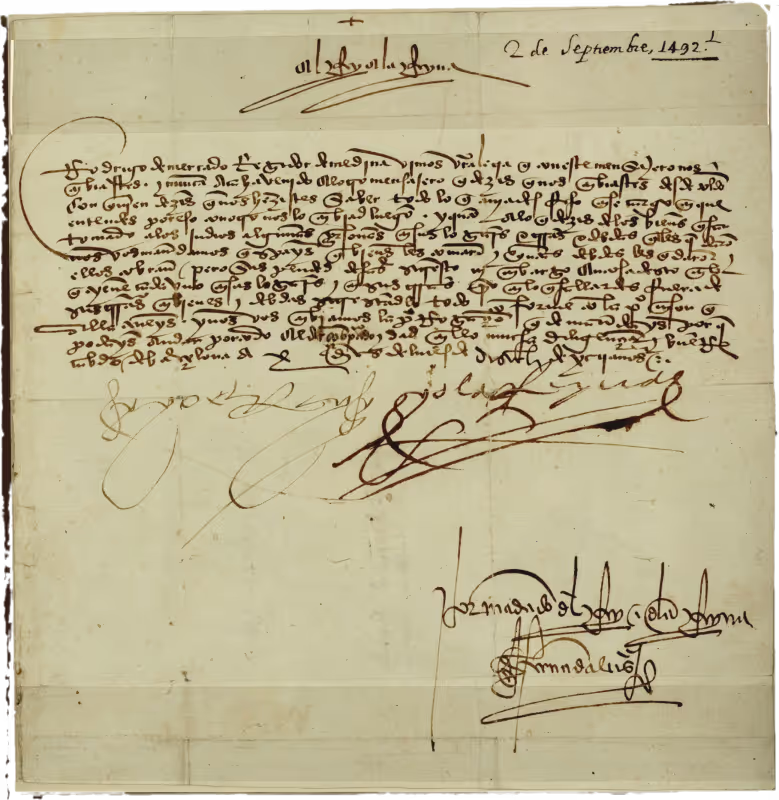
A letter written on 2 Sept, 1492 and signed on December 10, 1492, marks a transformative moment in world history. It shows the disastrous blunder by the Spanish government, enforcing an impulsive and impractical expulsion driven by religious fanaticism that impacted not only Spain but also Christian and Muslim countries across Europe and Africa.
• France’s economy was ruined after the expulsion in 1306 CE.
• Germany’s Nazi policy aimed to "Aryanize" the economy by seizing Jewish-owned businesses, a process that, while achieving some short-term aims for the regime, threatened to destabilize the economy by disrupting trade relations and destroying established commercial networks. More on it HERE.
• Middle East and North Africa, with the forced migration of Jews from Arab countries following 1948, resulted in an estimated loss of $263 billion in assets.
Aftermath:
Sultan Bayezid II granted Jewish refugees from the Spanish expulsion permission to settle in the Ottoman Empire and become Ottoman citizens. He ordered governors not to refuse Jews entry or cause them difficulties, but to receive them cordially.
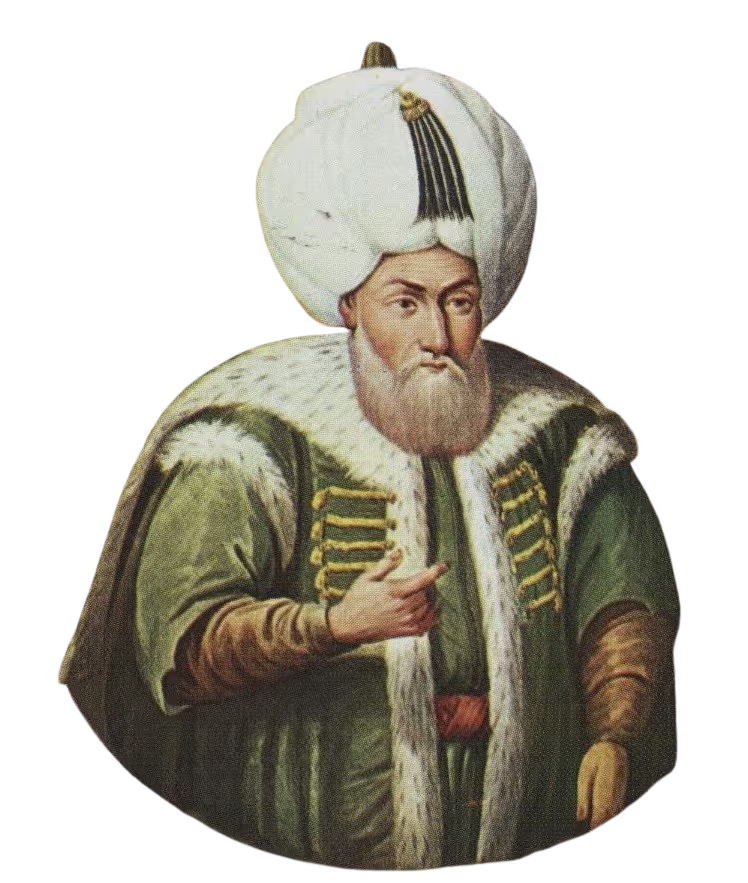
He admonished King Ferdinand by stating:
"You venture to call Ferdinand a wise ruler, he who has impoverished his own country and enriched mine!"
Many Sephardic (Spanish) Jews settled in Jerusalem, Tsfat (Safed), and Constantinople.
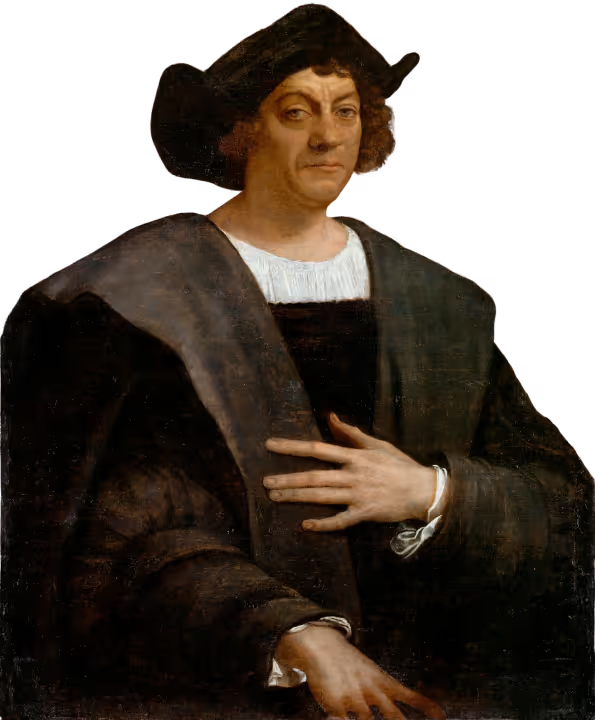
Christopher Columbus and the Jews
Christopher Columbus set sail the day (Tisha B'AV) after the Spanish Expulsion came into effect. Many factors regarding his expedition as well as DNA make a strong case that Columbus himself was a Jews.