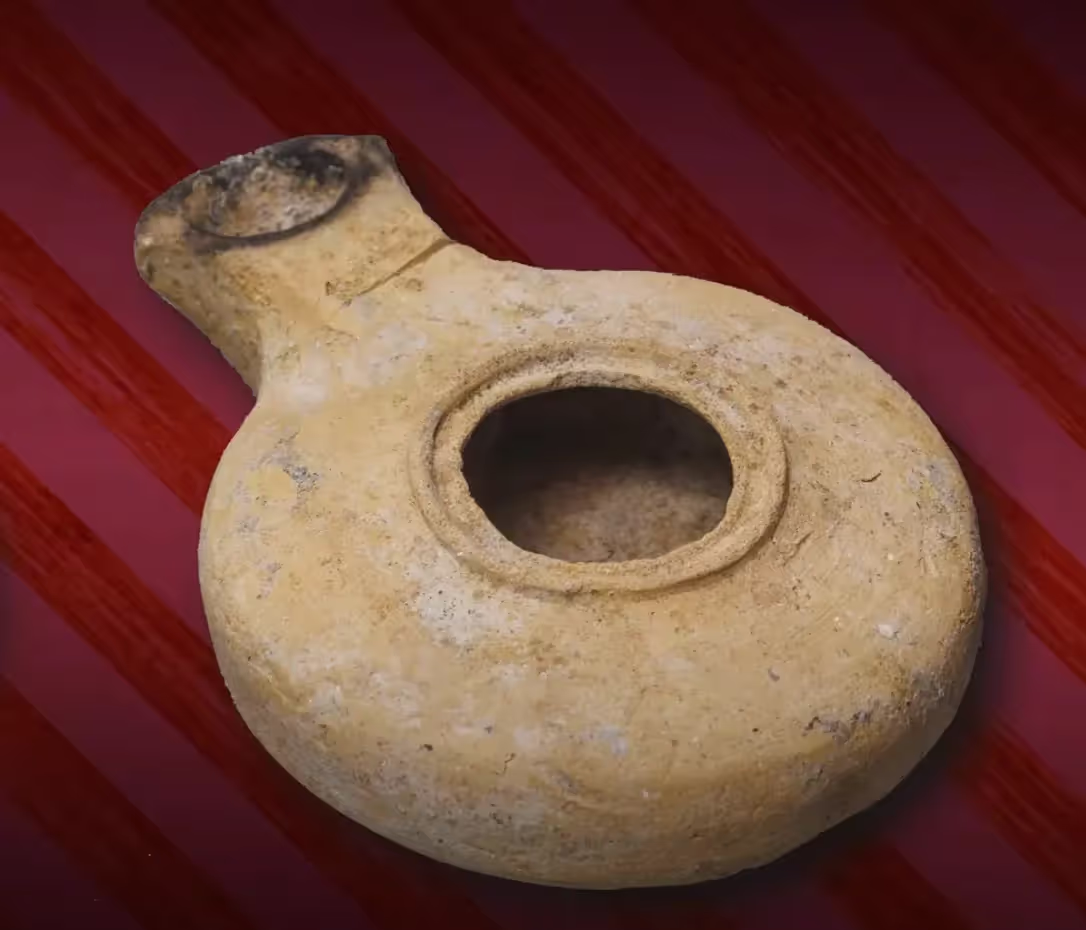
Mysterious Ancient Tunnel Discovered Just Outside Jerusalem
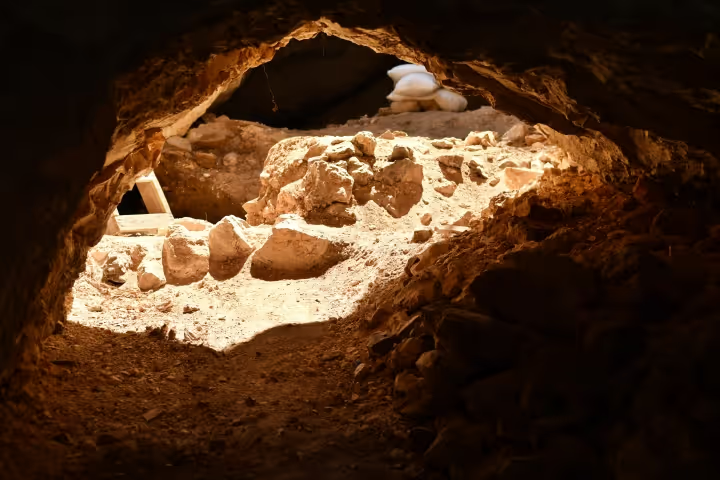
Photo: Yoli Schwartz, Israel Antiquities Authority
A mysterious and impressive ancient tunnel, hewn through the rock over a length of approximately 50 meters, was unexpectedly discovered near Kibbutz Ramat Rachel in Jerusalem. The extraordinary discovery was uncovered during archaeological excavations conducted by the Israel Antiquities Authority prior to the construction of a new neighborhood, funded and initiated by the Israel Lands Authority.
“We were excavating in relatively rocky and exposed terrain when suddenly we discovered a natural karstic cavity,” said Dr. Sivan Mizrahi and Zinovi Matskevich, excavation directors on behalf of the Israel Antiquities Authority. “To our amazement, as the excavation progressed, this cavity developed into a long tunnel. Parts of it are still collapsed, so the tunnel has not yet revealed all of its secrets.”

The entrance to the ancient complex from the surface was through a staircase descending to a hewn opening that led into the tunnel. The tunnel itself was discovered filled with layers of soil that had accumulated over hundreds, perhaps even thousands, of years.
Excavation at several points inside the tunnel showed that it reaches a height of up to 5 meters and a width of approximately 3 meters. “The quarrying was executed meticulously. It is clear that whoever carved this tunnel invested tremendous effort, careful planning, and possessed the capabilities and resources necessary to achieve this goal.”
Yet the purpose of the tunnel remains unclear.
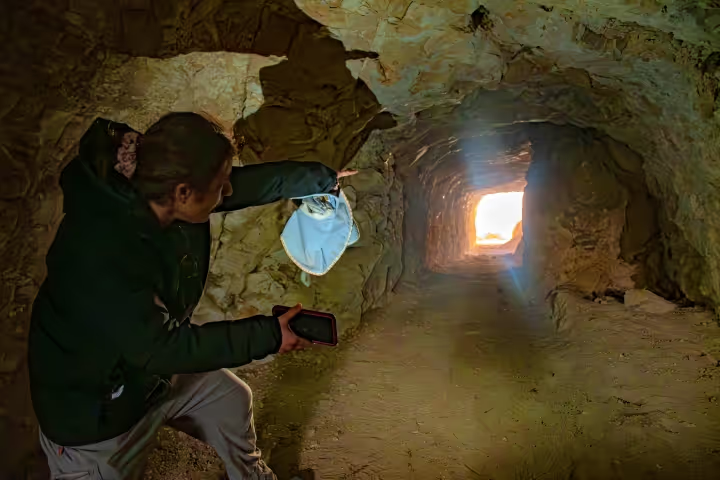
At first, researchers proposed that this was an ancient water installation intended to reach a spring source. This assumption, however, was ruled out, first because the tunnel walls are not plastered and, second, following consultation with a geologist, because no underground water horizons are known in this area, and the tunnel contains no indication of water accumulation.
The possibility that this was some kind of underground agricultural or industrial installation was then examined, but the scale of the work and the absence of comparable sites in the vicinity made this explanation unlikely.
The researchers’ current assessment is therefore that the tunnel was intended to reach a chalk layer suitable for quarrying building stones or producing lime. Possible evidence supporting this interpretation includes a shaft carved into the tunnel’s ceiling, which may have been used for ventilation, as well as quarrying debris discovered on the tunnel floor - although this interpretation, too, remains uncertain.
Alternatively, the findings may indicate that the quarrying and construction of the tunnel were never completed, and therefore its intended purpose and nature remain unknown.
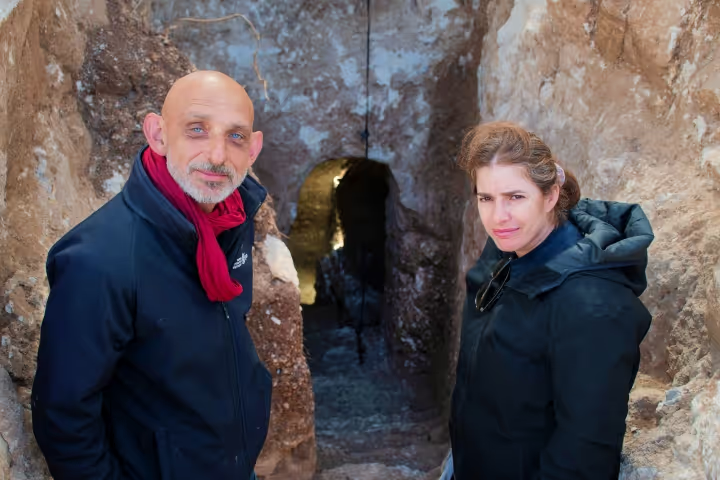
According to Dr. Mizrahi and Matskevich, “The date of the tunnel is also a mystery to us, since not even the smallest find was uncovered that could indicate when it was created. At the same time, the tunnel lies only a few hundred meters, as the crow flies, from two significant ancient sites - a public building from the Iron Age (First Temple period) in the Arnona neighborhood, and Tel Ramat Rachel, where settlement remains dating from the Iron Age through the Islamic period have been documented.”
According to Israeli Minister of Heritage Rabbi Amichai Eliyahu, “This special discovery reminds us of the deep and ancient connection of the Jewish people to Jerusalem. Beneath the city’s soil, extraordinary enterprises of life, creativity and construction are revealed time and again, testifying to generations of people who lived and worked here and left their mark. Jerusalem is not only the present-day capital of the State of Israel - it is also the heart of the historical story of the Jewish people, which continues to be uncovered before our eyes.”