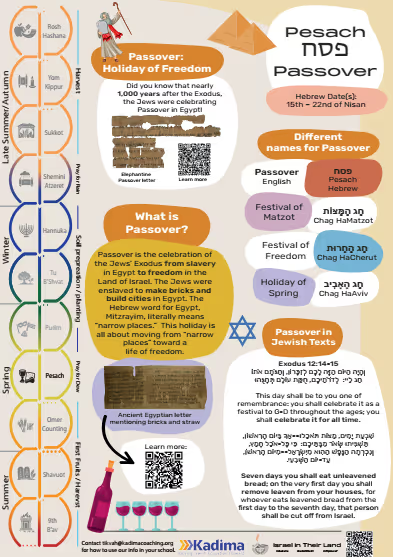


Passover/Pesach
Nearly 1,000 years after the Exodus, the Jews were celebrating Pesach in Egypt.
Keep reading on how the Jews kept Pesach through the ages!
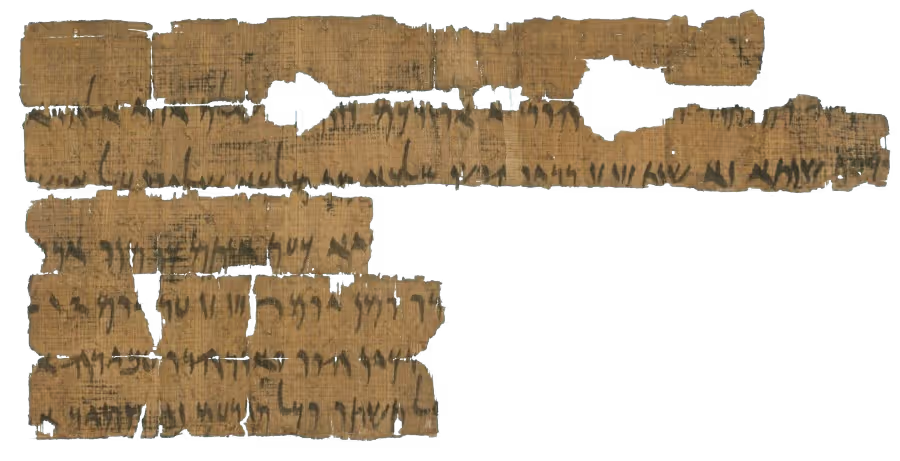
The Elephantine Pesach scroll is the oldest reference we have to the holiday of Pesach being celebrated outside of the Torah. Written in the 5th century BCE, 2,500 years ago, it is an instruction letter from Jerusalem to Jews in Elephantine (Egypt) on how to celebrate Pesach.
Learn more about the Elephantine Pesach Letter HERE
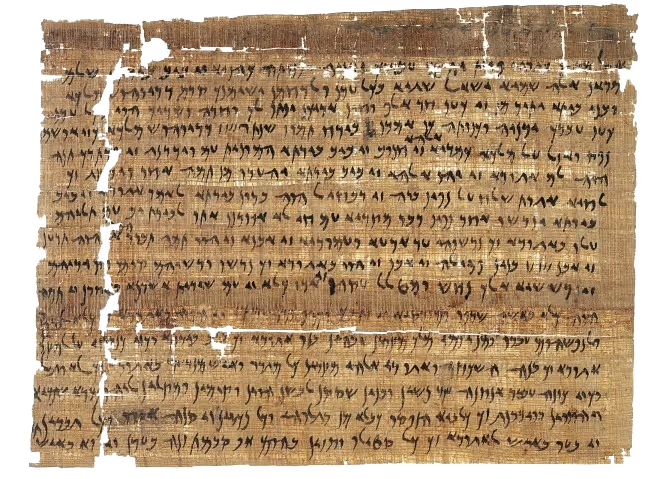
Learn more about the Jewish community in Elephantine:

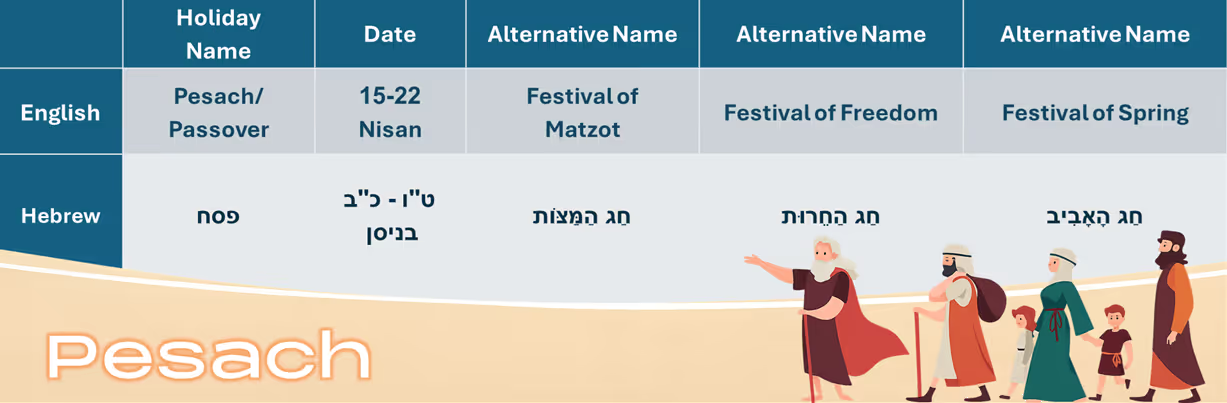
What is Pesach/ Passover?
Pesach is the story of the deliverance of the People of Israel, who were enslaved in Egypt for over 200 years. G-d performed mighty miracles and ultimately redeemed and liberated them with a mighty hand. But let’s go back to see how it all started:
Prologue:
After Jacob is reconciled with Joseph in Egypt, he and his sons settle in the Land of Goshen. Within two centuries, they grew into a mighty nation, numerous in number. The new Pharaoh and the Egyptians grew wary of Israel’s numbers and decided to enslave them to ensure the children of Israel would not rebel against the Egyptians.
The Israelites were forced into hard labor, producing bricks and building the cities of Pithom and Rameses.
Exodus 5:18 recalls the command to deliver the quota for brickmaking.
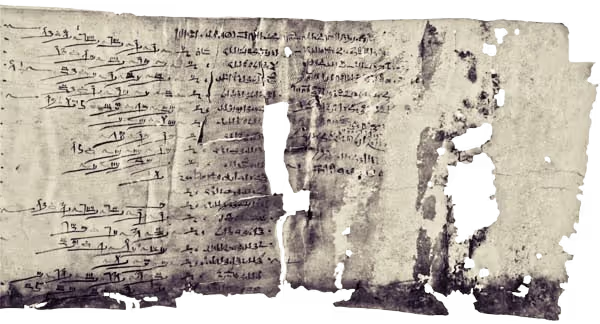
A leather scroll, circa 1274 BCE, from the fifth year of Ramesses II, displayed at the Louvre, records the case of a brickmaker who failed to meet his quota. Learn more here
When Moses arrives in Egypt and tells Pharaoh to let the Israelites go, Pharaoh is enraged and increases Israel’s workload by ordering them to source the straw for the bricks while keeping the same daily quota.

Learn more a brick and straw deficit written in the Papyrus Anastasi IV: “. . . and there are neither men to make bricks, nor straw.” here
Through the Ten Plagues, G-d systematically destroys the political, social, economic, familial, and religious foundations of Egyptian civilization, preparing the liberation of the Israelites from Egypt.
Mitzrayim (Egypt) – the Narrow places
The Hebrew word for Egypt, Mitzrayim, literally means “narrow places.” Pesach is all about “narrow places" toward a life of freedom. That is why we call this festival “Zman Cheiruteinu” – the Time of our Freedom. The other two major Biblical festivals are referred to as “Zman Torahteinu”, the Time of our Torah, which is Shavuot, and “Zman simchateinu”, the Time of our Joy, which is Sukkot.
Pesach in Jewish Texts
Pesach and the Exodus, as key events in Jewish history, are mentioned in numerous Jewish texts, including the Torah, the Ketuvim (writings such as Kings, Chronicles, and Psalms), and the prophets. It is discussed at length in the Talmud, Zohar, and early Jewish writings. Historian Josephus Flavius mentions Pesach at least five times in his writings. More on these mentions later in this article.
Exodus 12:14-15
This day shall be to you one of remembrance: you shall celebrate it as a festival to G-D throughout the ages; you shall celebrate it as an institution for all time. Seven days you shall eat matzot (unleavened bread); on the very first day you shall remove leaven from your houses, for whoever eats leavened bread from the first day to the seventh day, that person shall be cut off from Israel.
Pesach in Ancient Israel
• Pilgrimage:
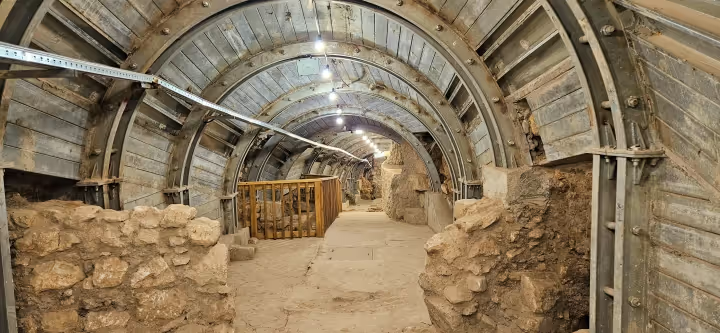
Jews from across the Land of Israel would travel to the Temple in Jerusalem to celebrate the holiday.
• The Pesach Lamb Offering:
Families would bring a lamb to the Temple as an offering to be shared for the holiday meal.
Why a Lamb on Pesach?
Did you know? In ancient Egypt, the Lamb was also one of their gods. From the 10th to the 14th of Nissan, every Israelite family had to take a lamb and bind it to their bedposts to examine it.
Exodus 12:3-6
‘On the tenth of this month, they are each to take a lamb for themselves, according to their fathers’ households, a lamb for each household....And you shall keep it until the fourteenth day of the same month, then the whole assembly of the congregation of Israel is to kill it at twilight.
The month of Nissan also has the mazal of Aries, the Ram. Binding the Egyptian lamb god to their bedposts vexed the Egyptians, but after a string of nine powerful plagues, the Egyptians were rendered powerless and filled with fear.
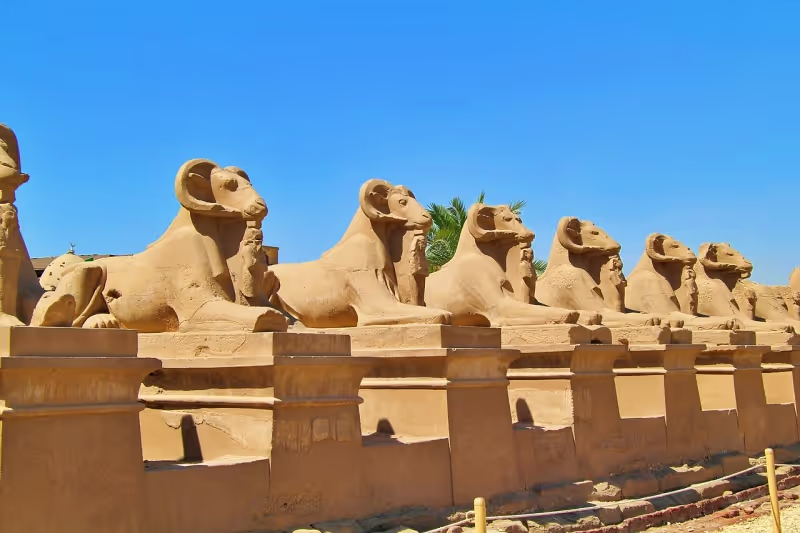
The honor given to a lamb as an Egyptian god can be seen in the Avenue of Sphinxes, or the King's Festivities Road, also known as Rams Road, 2.7 km long, which connects Karnak Temple with Luxor Temple. The sphinxes have the heads of rams.
The Pesach Offering Brought in the Temple: The Scope of the Day
The Pesach Offering was brought on the 14th of Nissan. [Note: It is important to know that Erev Pesach starts in the evening of the 15th of Nissan AFTER the Pesach offering was brougth, which is the actual beginning of the 7-day Festival, called Chag Matzot, or the Festival of Unleavened Bread.]
All the males in Israel had to bring the Pesach lamb offering on the 14th of Nissan. It was the busiest day on the Hebrew Calendar, and priests practiced weeks in advance to prepare for the day.
According to Josephus in The Jewish War 6.9.3 256,500 Passover lambs were sacrificed. It is estimated the over 1.5 million people congregated in Jerusalem and surrounding areas for the Pesach meal.
View an eye witness account of a Roman Commissioner and also the Talmud’s description of the Pesach Sacrifice service at the Temple on the 14th of Nissan at the bottom of this article.
• Hallel:
The Levites and the crowds sang songs of praise (Hallel) throughout the Temple courts.
• Counting the Omer:
Sheaves of Barley called the Omer were brought from the fields to a special courtyard in the Temple where they were counted. It marked the change from the rainy winter season to the dry summer season.
• Half-Shekel:
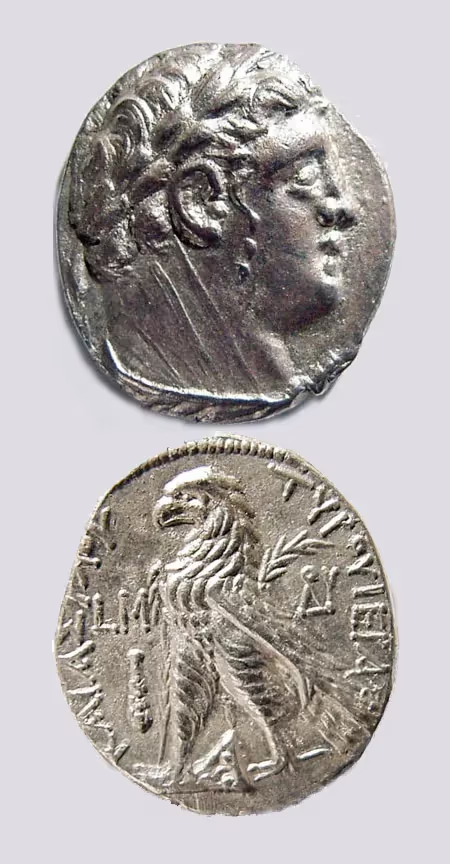
Each person contributed a half-shekel to help pay the annual communal sacrifices and maintenance of the Temple. They used coins like this Tyrian Silver Shekel that is more than 2,000 years old.
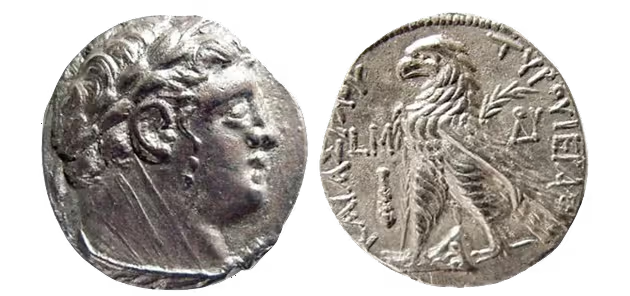
Learn more about the Tyrian Silver Shekel HERE
More on Pesach in Ancient Israel:
FIRST PESACH CELEBRATION IN ISRAEL (13th Century BCE)
Joshua 5:10
And the children of Israel encamped in Gilgal; and they kept the Pesach on the fourteenth day of the month at evening in the plains of Jericho.
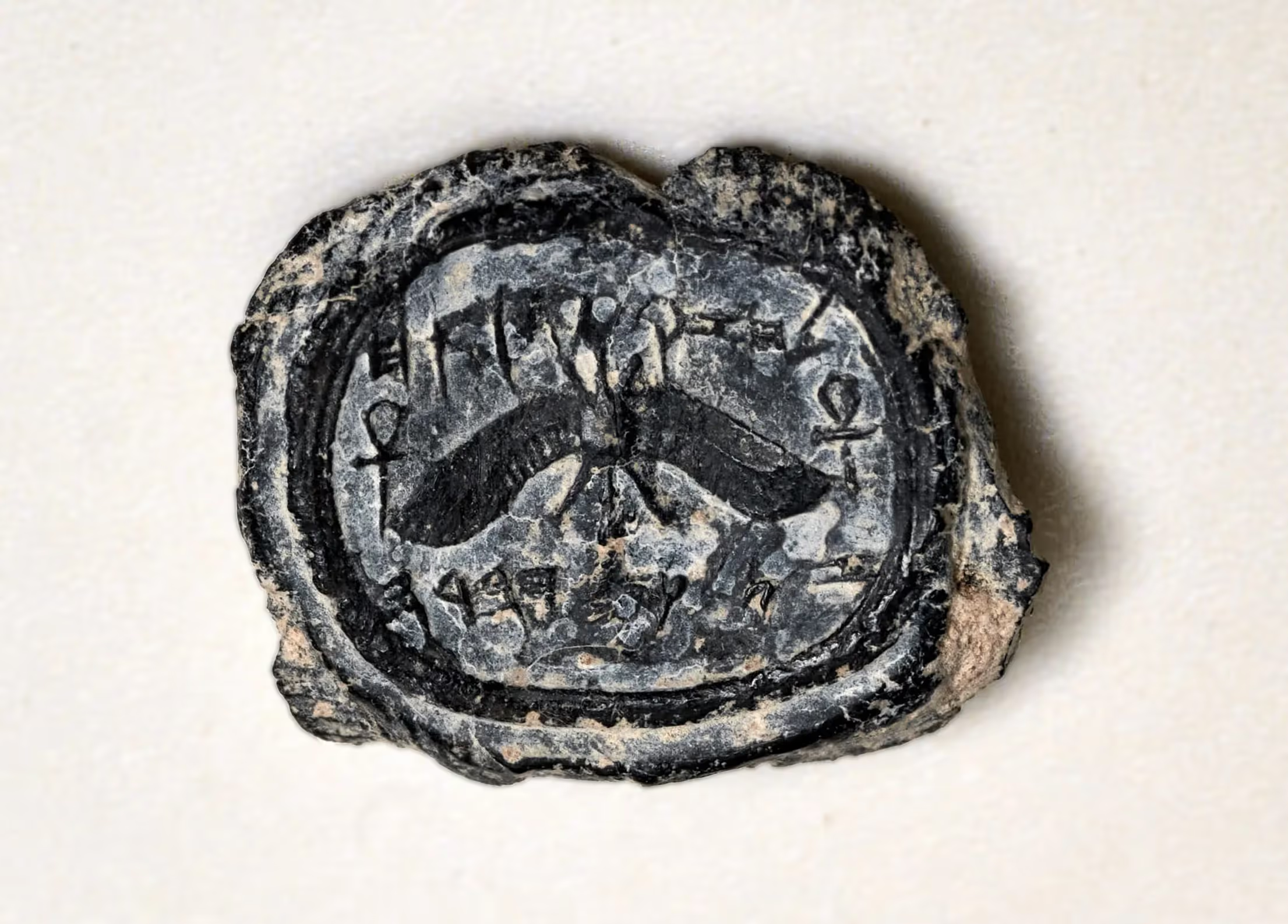
TIMES OF HEZEKIAH: (8th Century BCE)
2 Chronicles 30:1
“And Hezekiah sent to all Israel and Judah, and wrote letters also to Ephraim and Manasseh, that they should come to the house of the L-RD at Jerusalem, to keep the Pesach unto the L-RD G-d of Israel.”
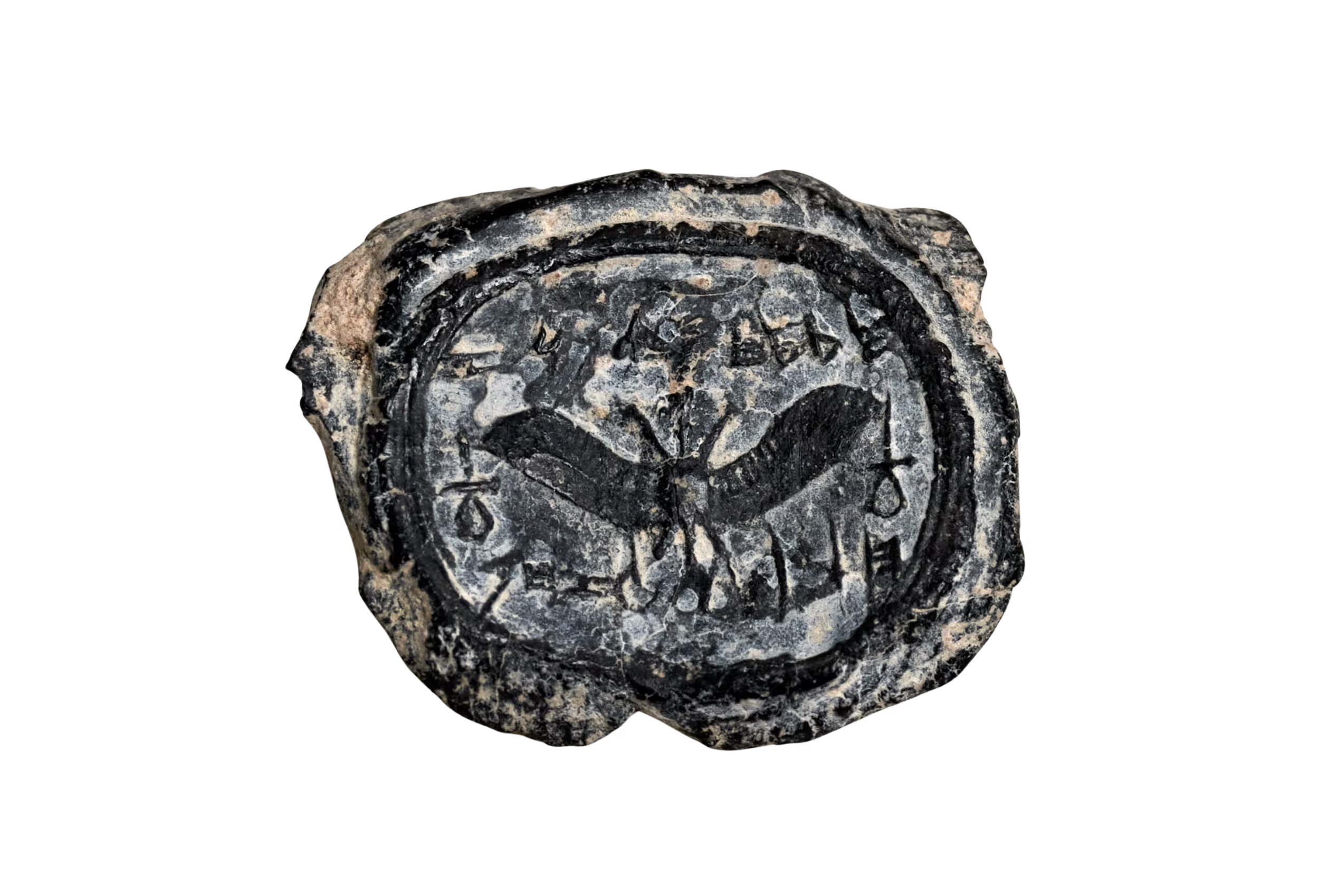
Learn more about Hezekiah's seal HERE
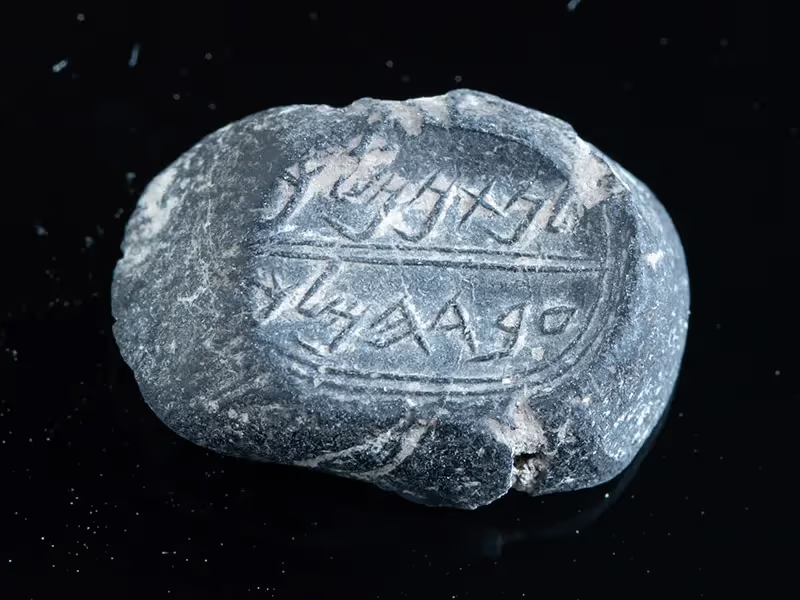
TIMES OF JOSIAH: (late 7th century BCE)
2 Kings 23:23
But in the eighteenth year of king Josiah was this Pesach kept to the L-RD in Jerusalem.
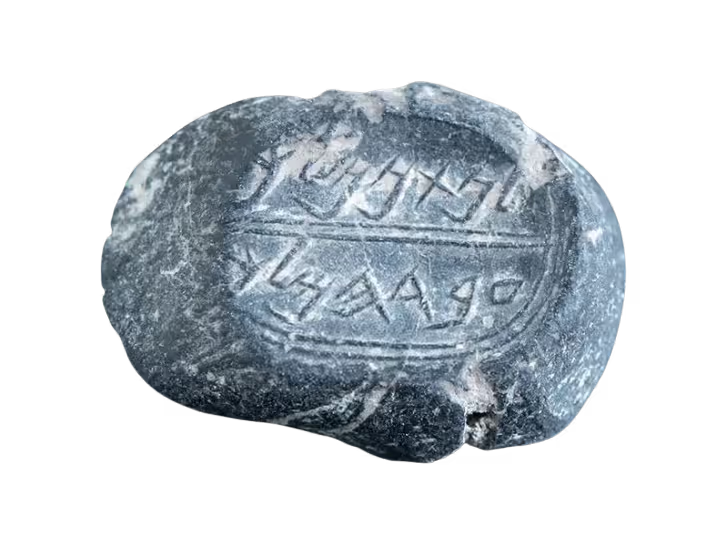
Learn more about the seal HERE
Sacrificial Bones Near Temple Mount
In 2013, Archaeologists discovered a city dump outside the old city walls of Jerusalem, dating between about 37 BCE and 66 CE. It contained an unusually high proportion of animal bones for an agricultural society.

The sheep and goat bones showed cut marks, clear signs of slaughter, indicating that the animals were used for meat consumption. These animals were used either as burnt offerings or as food at festivals stipulated in the Torah.
An analysis of the chemical isotopes in the bones revealed that the animals were brought to Jerusalem from far-flung rural desert locations, confirming pilgrimages to the Temple from across ancient Israel.
Josephus and Pesach
Josephus mentions Pesach a few times. The most important dates are:
4 BCE - Death of Herod
In Antiquities 17.9.3 he writes that a revolt broke out in Jerusalem just after Herod’s death during Pesach, when crowds were present. Thousands of Jews were killed by Roman troops during the festival.
66 CE (April) - The People Complain to Gallus during Pesach
The Jewish War (2.14.3): "When Cestius [Gallus, governor of Syria] came to Jerusalem at the time of the Festival of Matztot (unleavened bread), the people came out to him...They pleaded with him to alleviate the miseries of their nation and cried out against Florus, Procurator of Judea, as the bane of their country."
70 CE – Titus Lays Siege to Jerusalem during Pesach (3830 Hebrew Calendar)
In winter 69/70 CE, after a succession war in Rome, Titus led at least 48,000 troops—including four legions and auxiliary forces—back into Judea. By spring, his army had encircled Jerusalem, whose population had surged with refugees and Pesach pilgrims. - The Jewish War (6.9.3)
Key Rituals:
Ritual 1: Searching for Chametz (unleavened bread): NO Chametz can be left in the house over Passover. Before the holiday a thorough search for chametz is done traditionally using a candle for light and a feather to sweep up any crumbs. The Chametz is then burned, in Israel usually around big communal fires allocated by the municipalities.
Ritual 2: The Seder: Seder means order and the meal follows a very specific order of foods and rituals filled with hidden meanings. The Haggadah, which means to “tell” relates the story of Passover and the Israelites’ exodus from Egypt, including when God sent the 10 plagues to force Pharaoh to let the Israelites go.
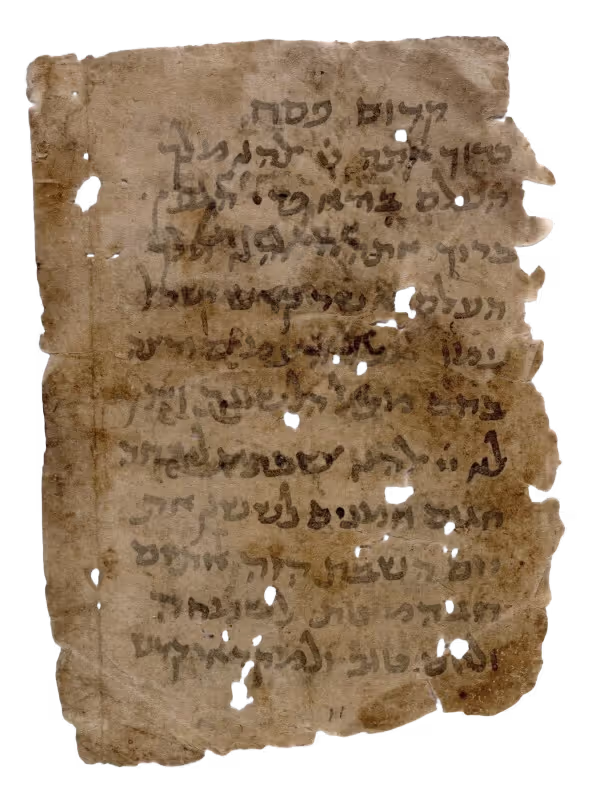
Oldest Pesach Seder account: 10th-century CE fragment found in the Cairo Genizah
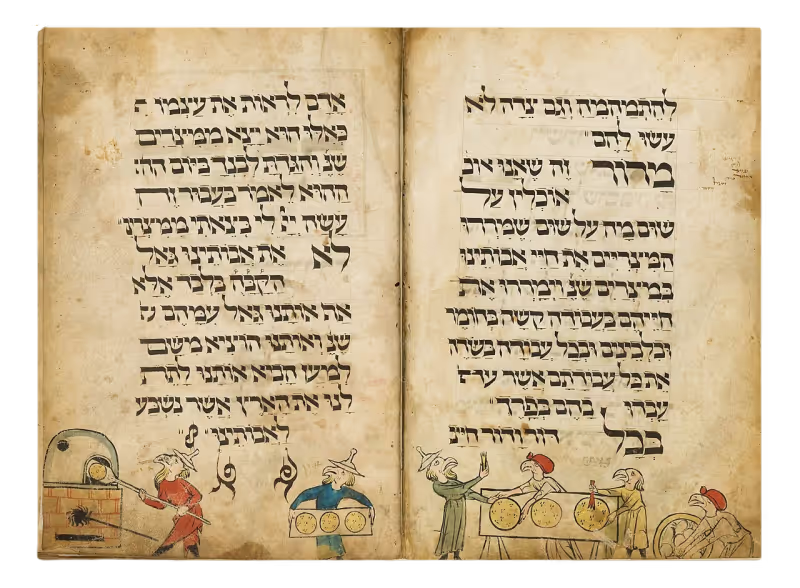
The famous Bird's Head Haggadah, written in 1300 CE. The artist depicted the individuals with bird heads.
Sarajevo Haggadah, c. 1350 CE, one of the oldest illustrated Haggadot, created in 14th-century Spain
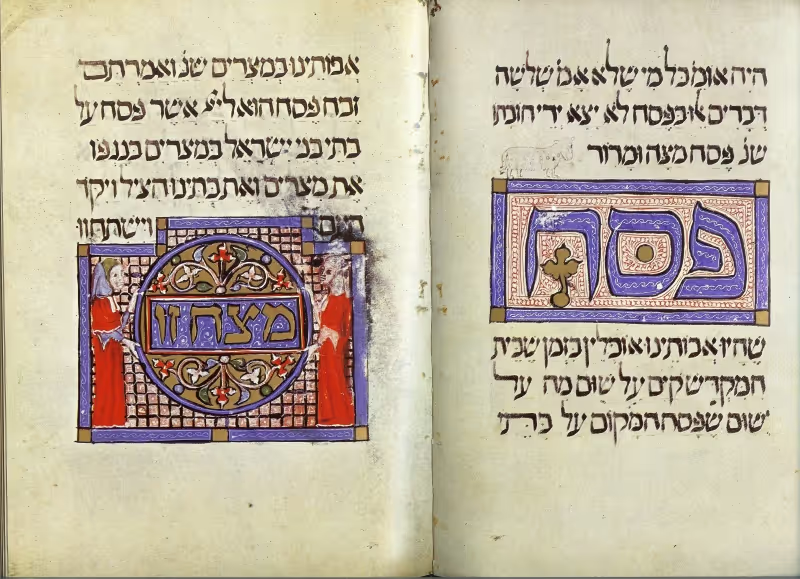
Ritual 3: Eating Matzah: The Israelites left Egypt in such a hurry that they didn’t have time for their bread to rise. For seven days, we eat Matza instead of leavened bread.
Ritual 4: Prayer for Dew: On the first morning of Pesach, the prayer for dew is recited. It marks the transition from the winter prayer for rain to the summer prayer for dew, highlighting dew as a delicate, non-damaging source of nourishment for the growing crops.
Ritual 5: Counting the Omer. From the second day of Passover, we start counting the Omer for 49 days leading up to Shavuot. Barley ripens first, and usually seven weeks later, the wheat is ready for harvest. Therefore for seven weeks barley sheaves were counted, and on the 50th day, Shavuot, the grain offering switched from barley to wheat.
The counting of the omer today follows the seven sefirot described in Kabbalistic sources. Every week covers on Sefira. The first week starts with Chesed (loving kindness), ending on the seventh week with Malchut (Kingship).
The Seven Sefirot are:
• Chesed (Loving Kindess)
• Gevurah (Strength and boundaries)
• Tiferet (Balance and Splendor)
• Netzach (Eternity and Victory)
• Hod (Majesty)
• Yesod (Foundation)
• Malchut. (Kingship)
Every week follows the combination of the main sefira and a coupling of the other Sefirot. One Week it will follow the pattern of Chesed within Chesed. Day 2 will be Gevurah within Chesed, etc. 49 combinations are made during the 7 weeks (7x7). The last combination is Malchut (kingship) within Malchut (kingship) followed by the 50th day which is Shavuot – the yahrzeit of King David, the epitome of Jewish Kingship. It is also on Shavuot that Ruth and Boaz met, the great-grandparents of King David. (More on Shavuot in our upcoming Shavuot article.)
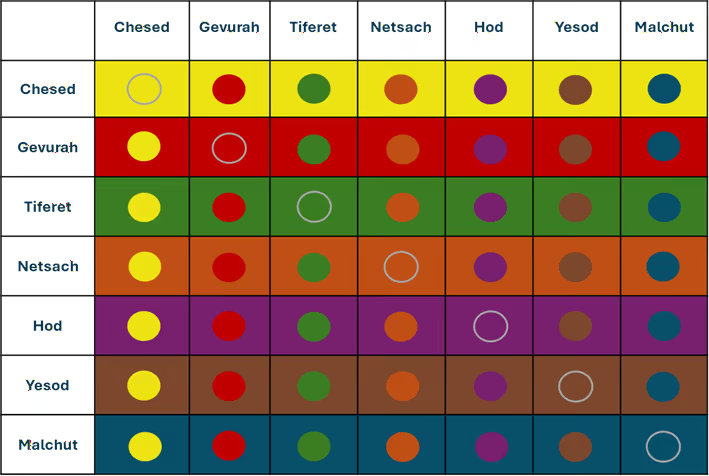
According to Kabbalistic sources the counting of the Omer is a tool to calibrate the soul (neshama) by making the 49 connections to each other.
A modern-day Omer counter.
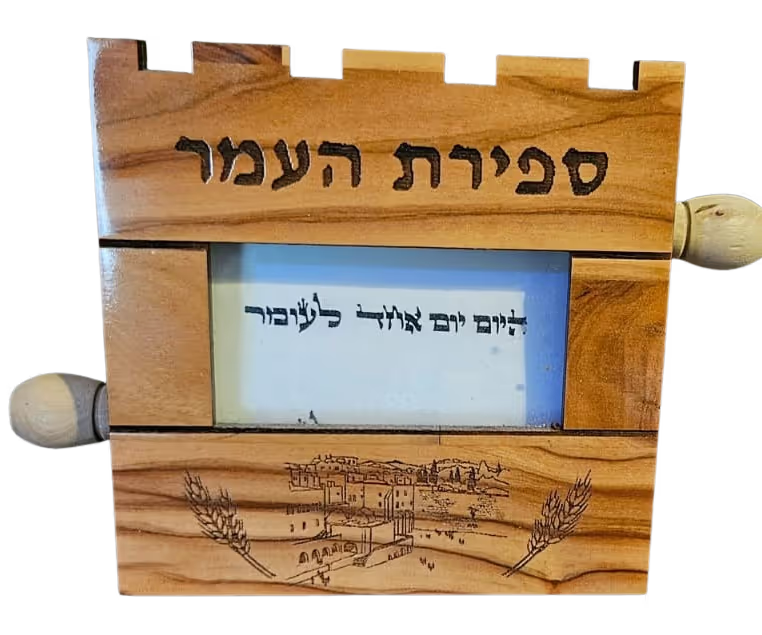
Action Point: Type in "Omer counters" in Google and see all the different types of Omer Counters.
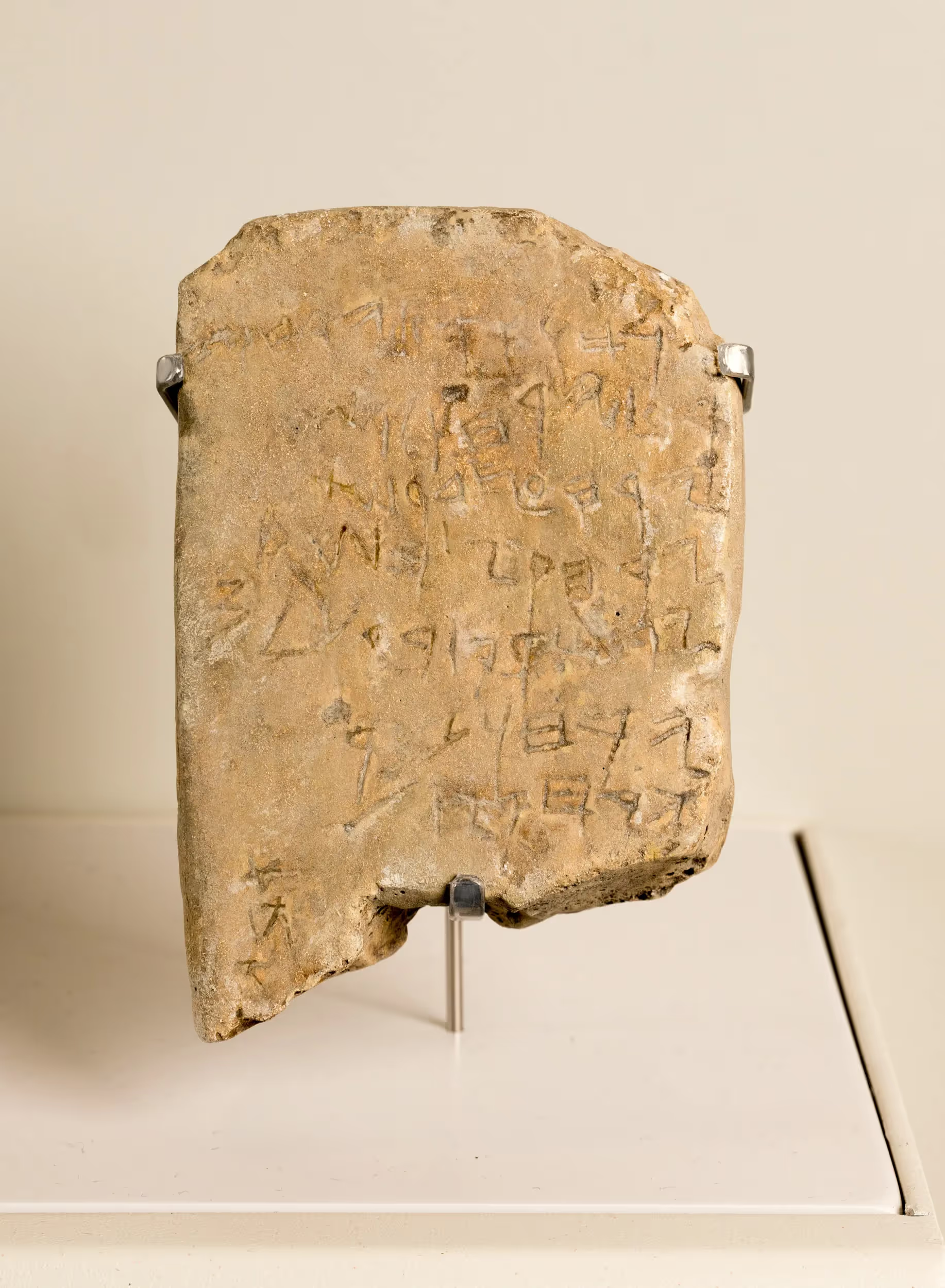
The Gezer Calendar: Counting Agricultural Cycles
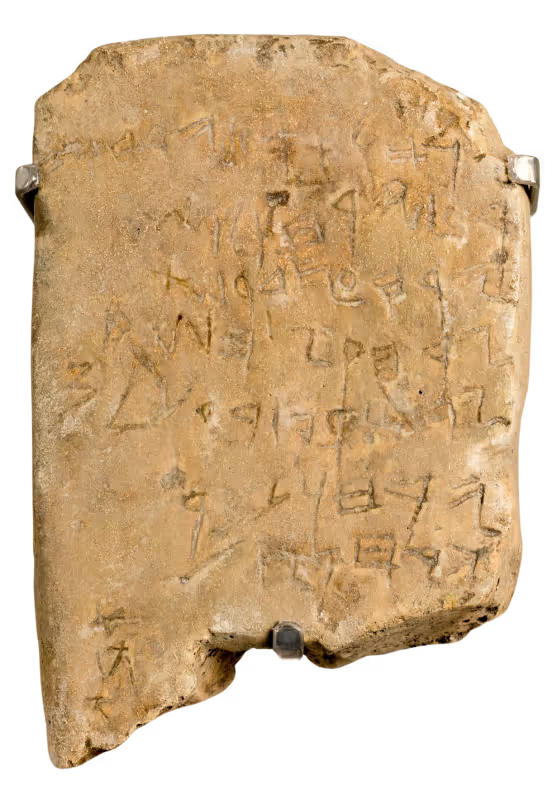
All Biblical festivals revolve around the yearly agricultural cycles. The Gezer Calendar (c. 10th century BCE) is widely considered the earliest physical object connected to counting agricultural cycles in ancient Israel—and by extension, the closest thing we have to an early “Omer-style” count.
Discovered in 1908 at Tel Gezer, written in early Paleo-Hebrew it dates to around the time of King Solomon (10th century BCE)
Learn more about it here
Why does Pesach matter?
Pesach is filled with many symbols and meanings.
• From Limitation to Freedom: We move from the “narrow places” (Mitzrayim) of personal or national struggle toward freedom.
• Empathy for the Oppressed: We remember that “we were slaves in Egypt” to develop empathy for those who are weak, oppressed and marginalized today.
• Good Triumphs: We carry the long-lasting hope that Good will triumph over Evil.
• Pray for Provision: We pray for a fruitful harvest season. Today, that means ways to provide, i.e., good job opportunities etc.
• From Arrogance to Humility: The search for Chametz is also symbolic of removing negative traits like arrogance from our lives and replacing them with positive ones, just as Matzah symbolizes humility.
Today in Israel:
• Mimouna: Many North African Jews in Israel mark the end of Pesach with the Mimouna celebration - a festival with mainly baked goods to extend the Pesach festivities.
• Celebrating Spring: In Israel, we welcome Spring (Aviv), marking the transition from the rainy winter to the dry summer.
AFTER THE EXODUS - ISRAEL IN THEIR LAND
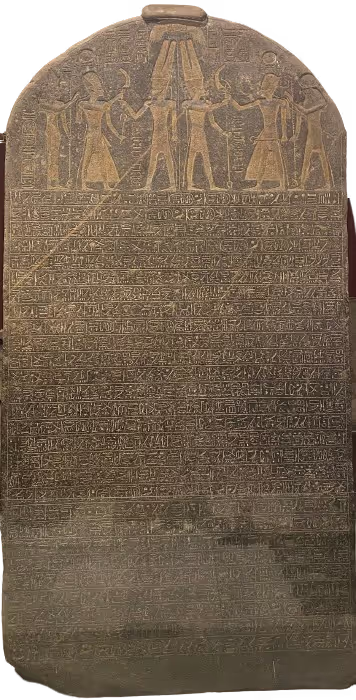
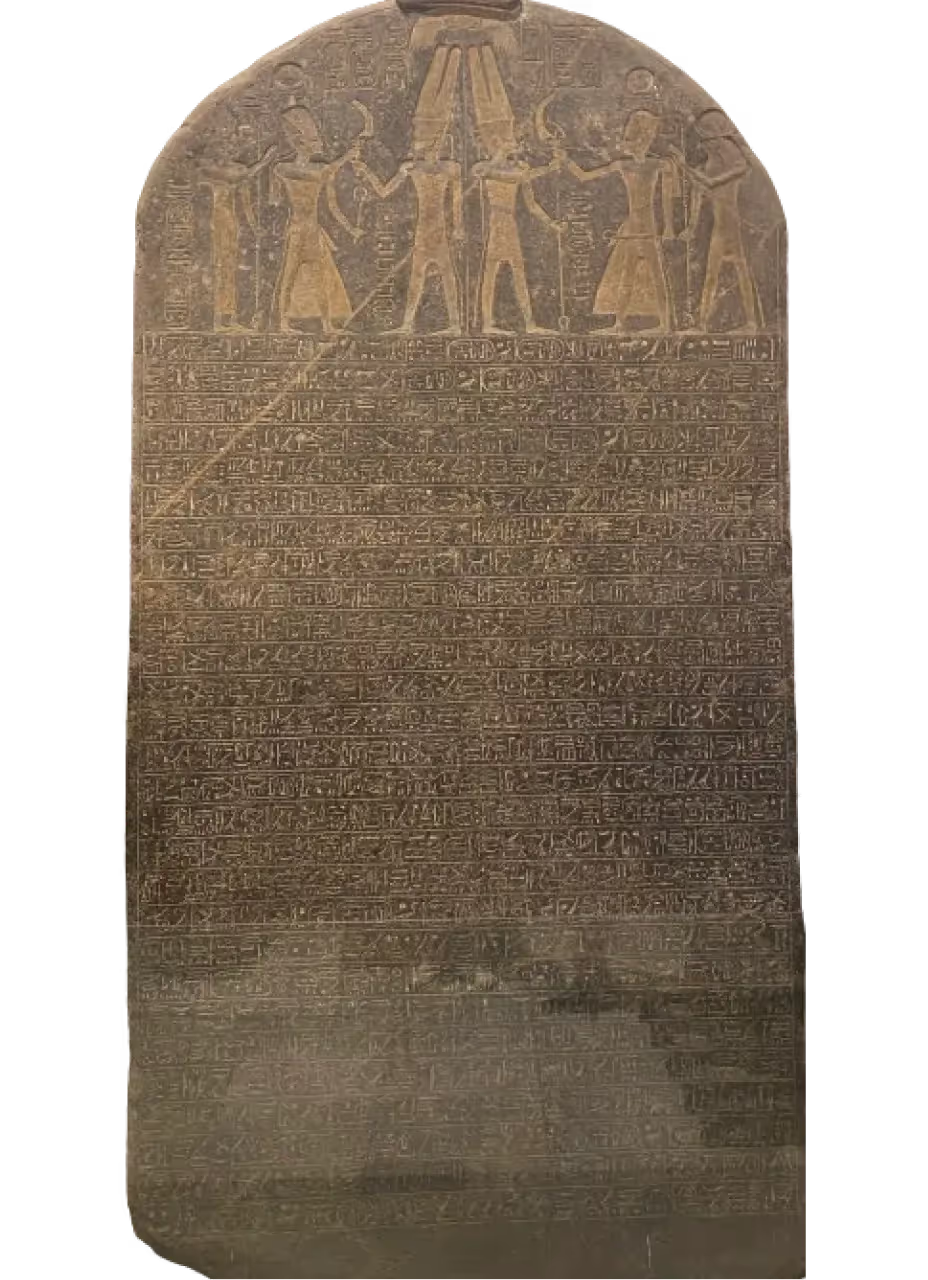
The Merneptah Stele: Earliest Extra Biblical Proof of Israel in the Land just after the Exodus
The Merneptah Stele, 1207 BCE, dating right to the end of the era of Moses and the Exodus and the entrance into the Land of Israel, mentions Israel as a People in the Land of Israel. Pharaoh Mernaptah writes:
"Canaan is plundered. Israel is laid waste, its grain is not."
Read more about the Merneptah Stele HERE
The Pesach Lamb Offering during the Time of the Second Temple
Roman Commissioner’s Eye Witness Account:
In the book 'Shevet Yehudah' (Solomon ibn Verga wrote it in the 1520s), mentioned by Rav Ya’akov Emden (the Yavetz) in his Siddur (1745-48), there is an eyewitness description of the ceremony of the Pesach Sacrifice, written by a Roman official who was stationed in Jerusalem during the period shortly before the destruction of the Second Temple.
His account corresponds to all of the details laid down in the Torah and elaborated upon by our Sages. He describes the beauty of the ceremony and the impression it made on him.
”When the beginning of the month, which they call Nissan arrives, couriers and messengers are sent out by order of the king and the judges, to all of the areas surrounding Jerusalem, that whoever possesses sheep and cattle should hurry to bring them to the Capital so that there should be a sufficient supply for the pilgrims, both for their sacrifices and for their food.
If anyone did not obey this order, his money would be confiscated for the use of the Sanctuary.
All owners of cattle would hurry to obey, and on the way to Jerusalem, they would bring their herds through a river to cleanse them of any dirt. When they reach the mountains around Jerusalem. they are so numerous that the grass cannot be seen. It appears to have become completely white because of the many sheep there. The sacrifice is offered on the fourteenth, so when the tenth of the month comes, everyone goes to buy their sacrifice, which they call ‘the Pesach’.
It is a rule amongst them that no one asks another to let him go first, even if it were King David or King Solomon. When I suggested to one of the Cohanim [Priests] that this was not polite, he told me that before the Omnipresent, there is no greatness and in His service, all are equal.
When the fourteenth of the month arrives, they go up a high tower of the Temple which they call the ‘Lul’ - it has a platform made like our canapario - and blow on three silver trumpets. Then they make a proclamation: “Oh people of G-d harken! The time has come to slaughter the Pesach offering for the One who causes His presence to dwell in this great, Holy House. When the people hear this announcement, they put on their festive attire, for, from midday onwards, it is a festival for the Jews, since that is the time for the sacrifice.
At the entrance of the great courtyard, twelve Levites stand outside with silver sticks in their hands. Inside stand another twelve with golden sticks. Those outside are to keep the pilgrims in order that they do not harm one another in their great haste and so that they do not enter in confusion and cause quarrels. It once happened on Pesach, that an old man and his offering were crushed by the pressure of the crowd. The Levites who stand inside have to keep order among those who are leaving the courtyard. These are also used to close the gates of the courtyard when enough people have entered.
At the place where the offerings are slaughtered, there are several rows of Cohanim with silver spoons and some with golden spoons in their hands. The Cohanim in one row all have silver spoons and those in another row all have golden ones, so that it looks most beautiful.
The Cohen at the head of each row receives a spoon of blood from the slaughtered animal and passes it to his neighbour and he to his neighbour until it reaches the altar. The one standing nearest the altar would send the spoon back empty and this would be passed from hand to hand until it reached the other end of the row. This was done in such a way that each Cohen received a full vessel with one hand and an empty one with another. There is no delay in this procedure. The men were so nimble that it seemed as if the vessels were flying like arrows from the bow of a trained marksman. They used to practice this for thirty days before the required time so there should be no mistakes and they would know their task perfectly.
At the same place, there are two high platforms on which stand two Cohanim with trumpets of silver. These are sounded whenever a new group of pilgrims begins to bring sacrifices so that the Levites who are standing on their platforms should know that they must now sing the Hallel prayer with joy and thanksgiving, accompanied by all the musical instruments which they possess.
The owner of the offering also says Hallel and if all of the offerings have not yet been slaughtered, then Hallel is repeated. After the slaughtering (is completed), the pilgrims go to the courtyards.
Here, all the walls have iron teeth and prongs so that the offerings can be hung up and skinned. There also bundles of sticks so that if there is no hook vacant, a person will suspend a stick from his shoulder to that of his friend and skin the lamb on it. The parts that are to be offered on the altar are given, and then the owner goes away joyfully, like a victorious warrior returning from battle. For it is considered a great disgrace among the Jews if one does not bring the Pesach offering at the correct time.
While the Cohanim are engaged on this task, they were short red tunics reaching to their thighs. These are red so that any blood which is spilt does not show. They stand barefoot and their sleeves reach only to the elbow so that they should not be hampered while they work. On their heads, they wear a small hat with three cubits of cloth wound round it into a turban. People have told me that the Cohen Gadol has a white turban made of forty folds of cloth.
The ovens on which they roasted their sacrifices were at the entrance to their houses and they told me that this was to demonstrate their faith and also to rejoice even more. They sing joyfully while they eat and their voices can be heard from afar. No one locks his door that night in Jerusalem out of respect for the many strangers passing through the streets.”
Description from Mishna Pesachim, Chapter 5 and Mesechet Pesachim 64b
[Source: Sefaria ]
The Paschal lamb was slaughtered in three groups, meaning those bringing the offering were divided into three separate sets, as it is stated: “And the whole assembly of the congregation of Israel shall slaughter it in the afternoon” (Exodus 12:6). The verse is interpreted as referring to three groups: Assembly, congregation, and Israel. The procedure for sacrificing the offering was as follows: The first group of people sacrificing the offering entered, and when the Temple courtyard became filled with them they closed the doors of the Temple courtyard. They sounded uninterrupted, broken, and uninterrupted trumpet blasts, as was done while sacrificing any offering.
The priests stood in rows from the place of slaughter to the altar, and in their hands they held bowls [bezikhin] of silver and bowls of gold in order to receive the blood of the offerings. There was a row entirely composed of priests holding silver bowls, and a row entirely composed of priests holding gold bowls, as the gold and silver bowls were not mixed in the same row. The bowls did not have flat bases that would allow them to be put down, out of concern that perhaps the priests would set them down and forget about them and in the meantime the blood would congeal and become disqualified for sprinkling on the altar.
An Israelite would slaughter the sacrifice, and a priest would receive the blood and immediately hand it to another priest standing next to him, and the other priest would pass it to another. Each priest would receive a full bowl of blood from the priest next to him and return to him an empty bowl being passed in the opposite direction, the contents of which had already been sprinkled on the altar. The priest who was closest to the altar would sprinkle a single sprinkling of blood against the base of the altar, i.e., against the north and west sides of the altar, where there was a base.
The first group exited upon completion of the rite, and the second group entered; the second group left upon completion of its rite, and the third group entered. As it was done by the first group, so was it done by the second and third groups. All the people standing in the Temple courtyard while the Paschal lambs were being slaughtered would recite hallel. If they finished reciting it before all the offerings were slaughtered, they recited it a second time, and if they finished reciting it a second time, they recited it a third time, although in practice they never recited it a third time, as the priests worked efficiently and finished the rite before this became necessary. Rabbi Yehuda says: The third group never reached even once the opening verse of the fourth chapter of hallel: “I love that the Lord hears the voice of my supplications” (Psalms 116:1), because its people were few and the slaughtering of all the offerings was completed during the recitation of the first three chapters.