Nikud Vowel System Developed in Tiberias After the 749 CE Earthquake
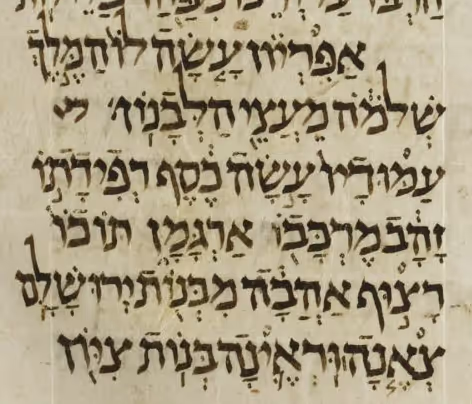
As part of the effort to preserve the oral tradition during difficult times of Jewish persecution, a vowel system, or Nikkud, was developed in the mid-8th century by Jewish scribe-scholars called (בַּעֲלֵי הַמָּסוֹרָה, Baʿălēy Hammāsōrā,) or Masoretes. As the Torah does not include vowels, this system ensured the correct pronunciation when the Torah is read.
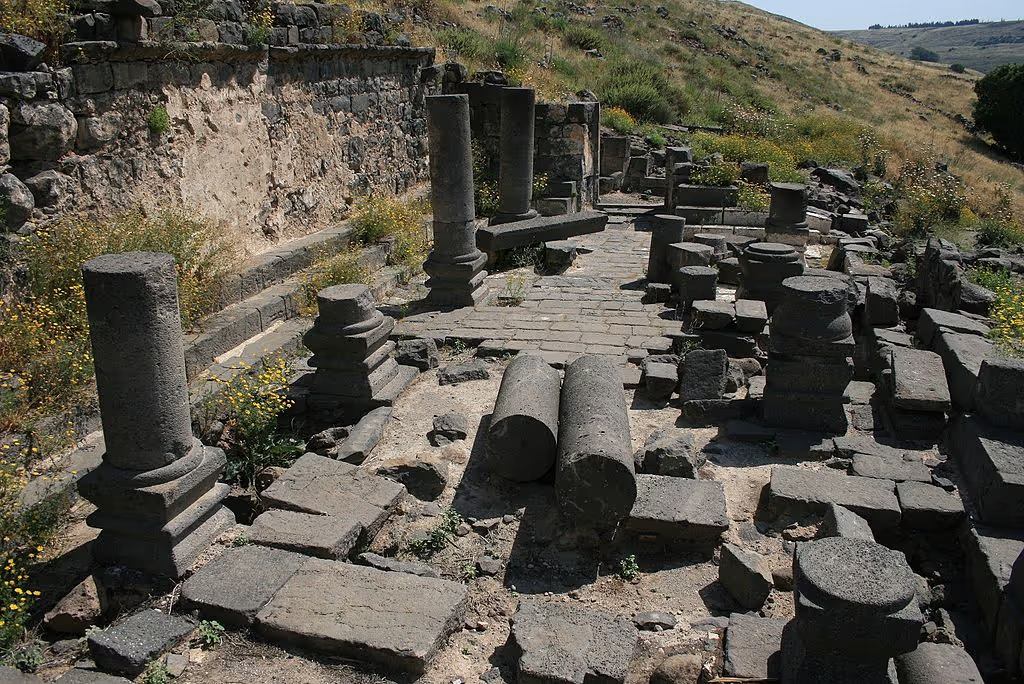
Tiberian Hebrew, the most widely used Nikkud system, was developed by scholars living in the Jewish community of Tiberias in ancient Galilee from 750 CE onwards, after the 749 CE earthquake during the Abbasid Caliphate.
The Aleppo Codex, the oldest surviving Hebrew Bible, written in 920 CE in Tiberias, cites these early codices in the margins.

Overview
Tiberian Hebrew, a nikud or Hebrew vowel system, was developed in Tiberias after the earthquake in 749 CE.
The Aleppo Codex, the oldest surviving Hebrew Bible, was written in 920 CE in Tiberias, citing early codices in the margins.
In the Bible

Life lessons

Humor

Advocacy

Fun fact

Antisimetism