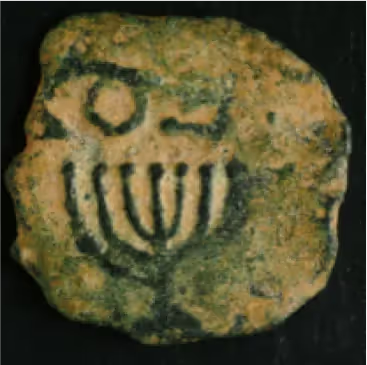
Rare Coins, including a seven-branched menorah coin, salvaged by the Israel Antiquities Authority and the United States authorities
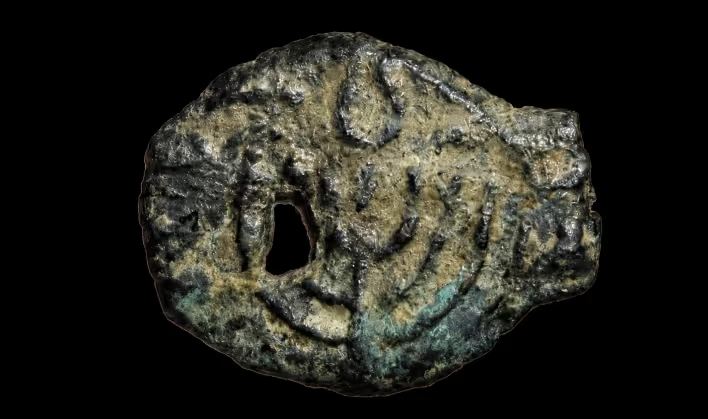
A joint Antiquities theft investigation by the Israel Antiquities Authority and United States authorities led to the return of two rare and ancient coins to the State of Israel.
One depicts the seven-branched menorah that stood in the Second Temple in Jerusalem, and another is only the second known of its kind in the world.
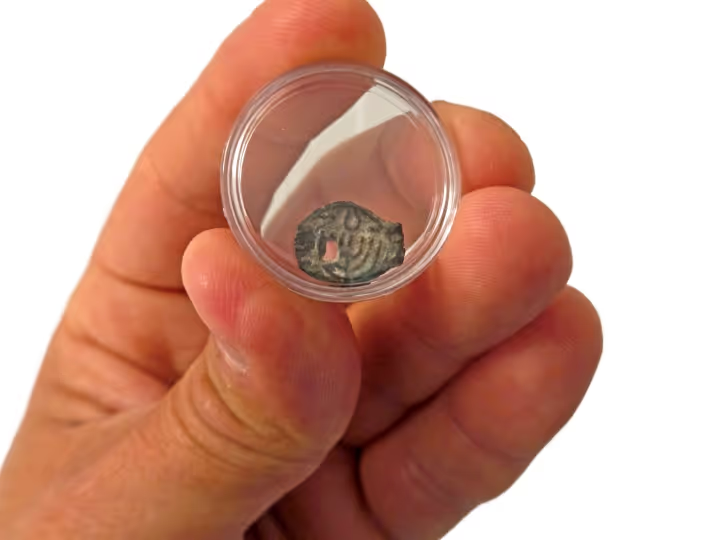
An ancient and rare coin depicting the seven-branched menorah that stood in the Temple in Jerusalem, and another rare coin from Ashkelon – the second of its kind known in the world, were returned to Israel this week (Monday) in an official ceremony in New York City. This follows a complex international operation by the Israel Antiquities Authority's Theft Prevention Unit in cooperation with the Antiquities Trafficking Unit at the Manhattan District Attorney’s Office and Homeland Security officials .
The coins were minted in Hasmonean ruled Jerusalem and in the ancient Mediterranean port city of Ascalon. They were taken from the soil by antiquities looters, and were allegedly smuggled out of the country. Recently the coins were put up for sale at auction houses in the United States to the highest bidder. Intelligence information passed on by inspectors of the Israel Antiquities Authority Theft Prevention Unit to the US authorities led to the opening of an investigation against both the auction houses and the sellers. A rapid joint investigation helped to provide evidence against the suspects, and ultimately the coins were confiscated to be returned to Israel.
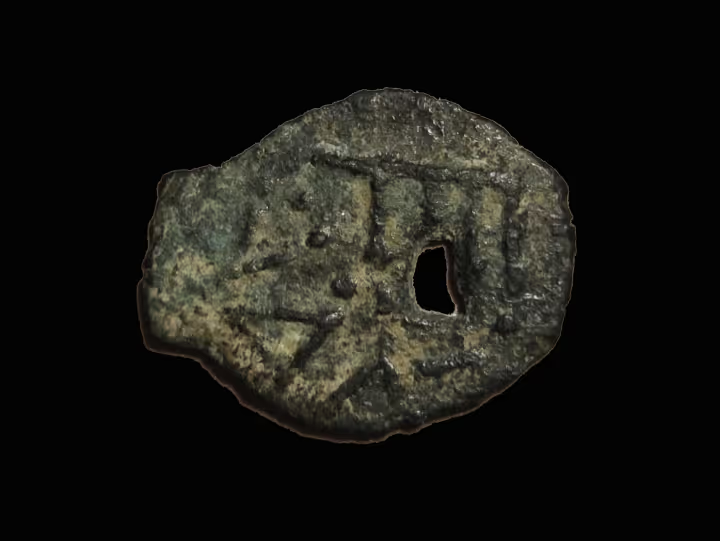
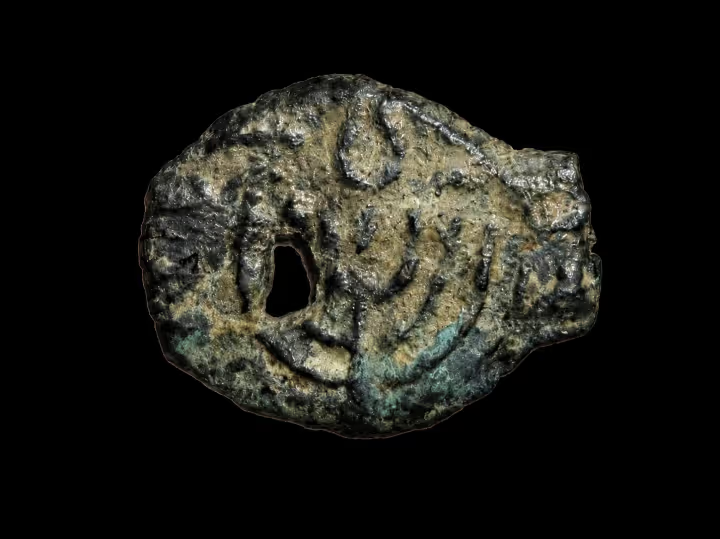
One coin is a small bronze prutah, minted during the reign of the last Hasmonean king, Mattathias Antigonus, who ruled in Jerusalem from 40 to 37 BCE. On one side of the coin appears an image of a seven-branched menorah –one of the earliest artistic representations of the menorah. This is the only Jewish coin with a depiction of the seven-branched candelabrum which stood in the Temple in Jerusalem. The other side of the coin bears a depiction of the showbread table, another sacred object used in the temple. Antigonus' choice as king and high priest to display distinctly Jewish symbols on his coin probably stemmed from his desire to gain the support of his kingdom's inhabitants as he struggled against his rival Herod, who enjoyed Roman political and military support. Due to its rarity, and as the last coin of Hasmonean independence, this coin type was defined as an item of national importance, and specimens of this coin are prohibited from being exported outside of Israel.
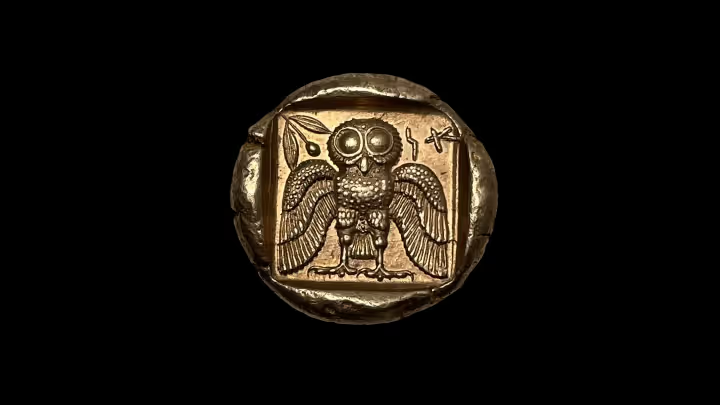
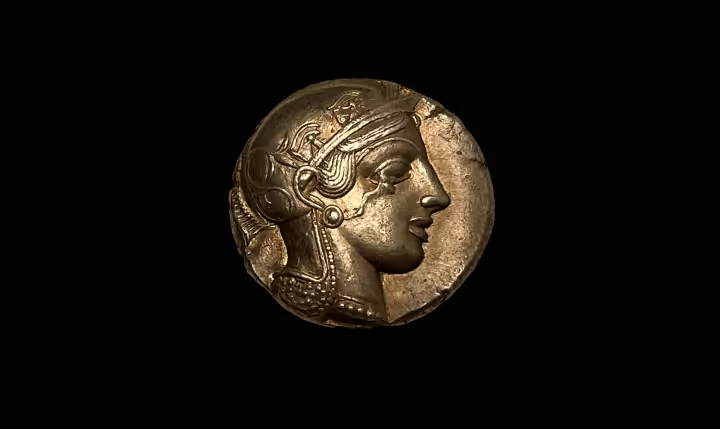
The second coin which returned to Israel yesterday is a silver tetradrachm from the Persian period, minted in Ascalon, over 2500 years ago. This is one of the rarest of ancient coins minted in the Land of Israel, and so far, only one other exemplar is known to exist, now in the Israel Museum coin collection. Its design is inspired by the Athenian tetradrachm – the standard currency throughout the Eastern Mediterranean during this period. One side depicts the helmeted goddess Athena, and on the other side an owl facing, spreading its wings. Above the owl in the upper right corner appear the letters “Aleph” and “Nun” in Phoenician script – an abbreviation for the name of its mint 'Ascalon', the first and last letters of the city’s name. This extremely rare coin is also prohibited from being exported from the State of Israel due to its rarity.
At the official state ceremony returning the coins, that was held at the Manhattan District Attorney's Office, Colonel Matthew Bogdanos, Chief of the Antiquities Trafficking Unit, said, “These extraordinary coins represent an important piece of history that is finally coming home. Furthermore, they represent an extraordinary partnership between the Antiquities Trafficking Unit in New York and the Israel Antiquities Authority. This is a partnership that should serve as a model for the return of looted cultural heritage around the world.”
According to Ilan Hadad, Inspector in charge of antiquities commerce in the Israel Antiquities Authority's Theft Prevention Unit: “The illegal trade in antiquities is a distressing international phenomenon, which constitutes an economic engine promoting antiquities looting and untold damage to cultural heritage assets. For the sake of money, thousands of years old antiquities from the State of Israel are looted, smuggled and sold abroad. Inspectors of the Israel Antiquities Authority's Theft Prevention Unit are fighting this phenomenon in order to preserve and protect the historical heritage of the State of Israel.”
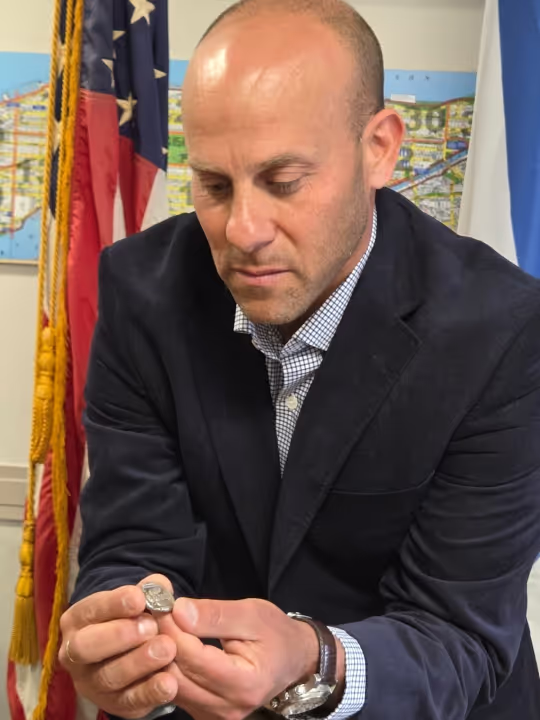
Dr. Eitan Klein, Deputy Director of the Antiquities Theft Prevention Unit, who represented the country at the repatriation ceremony of these ancient objects, declared: “The illegal trade in looted antiquities is a widespread international phenomenon, which requires cooperation between countries and enforcement agencies around the world. The Israel Antiquities Authority is at the forefront of the struggle to protect and preserve the unique cultural heritage assets of the State of Israel and conducts extensive international cooperation in this field around the world. The cooperation with our counterparts in the United States is exceptional in its scope and quality, and made this success possible, along with many other successes in the fight against the illegal antiquities trade.”
According to Israel’s Minister of Heritage, Rabbi Amihai Eliyahu, “Israel and the United States are working shoulder-to-shoulder not only in the security arena, but also to bring home our historical story. The rare coin with the seven-branched menorah is a clear symbol of Jewish life in the Land of Israel thousands of years ago. The theft of antiquities is an attempt to erase this history of ours and cut us off from our roots. They will not succeed. We will continue to act resolutely together with partners around the world to stop this phenomenon and to protect our heritage.”
.avif)