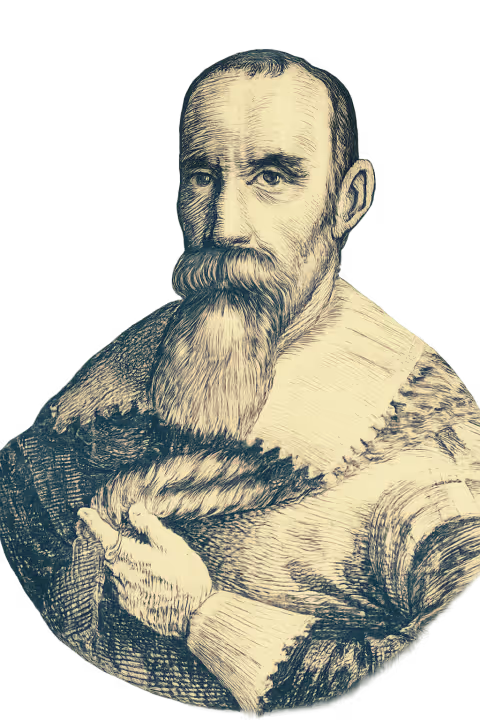
Yitzchak (Isaac) Luria Revolutionized the Kabbalah in Tsfat (Safed) in the Land of Israel
Rabbi Yitzchak Luria, also known as the holy ARI, was born in Jerusalem and grew up in Egypt. He returned to Israel and settled in Tsfat at the start of 1570, where he joined the circle of students who studied Kabbalah under Rabbi Moshe Cordovero (the Ramak). The Ramak passed in June, that same year.
Rabbi Luria was undisputedly the greatest practitioner and expounder of Kabbalah since Rabbi Shimon bar Yochai, author of the Zohar.
The Ari's system transformed earlier Kabbalah into a dynamic, historical, and deeply mystical framework that became the foundation and guide to Jewish mysticism and Kabbalistic traditions.
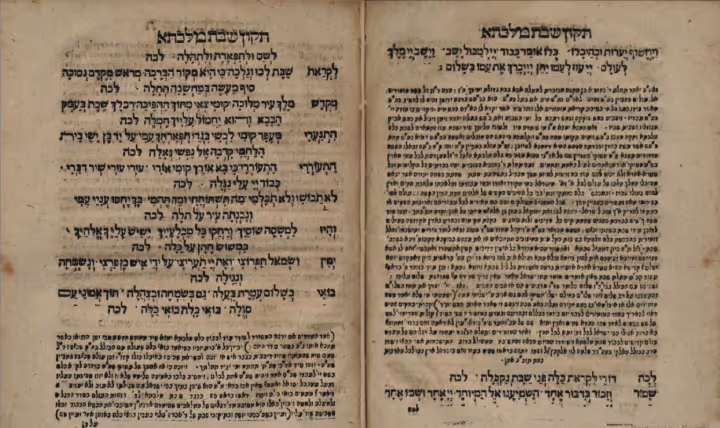
The Ari left no physical manuscripts on mystical topics. His teachings were transmitted through his disciples, foremost among them Rabbi Chaim Vital.
His time in Israel was also short-lived, and the Arizal passed away in 1572 at the age of 38, less than two years after his arrival in Tsfat.
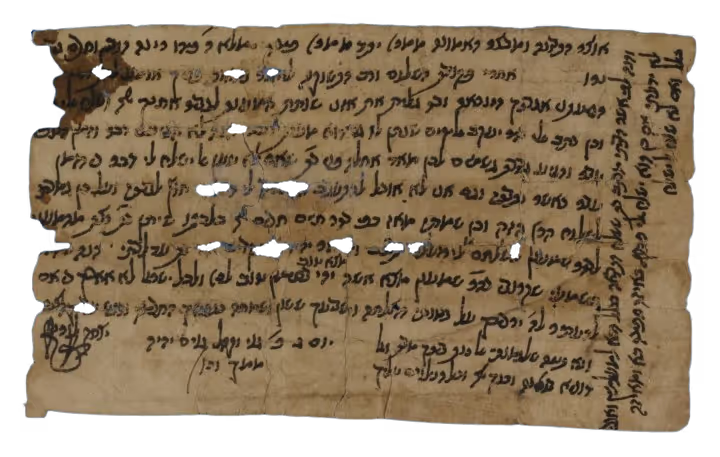
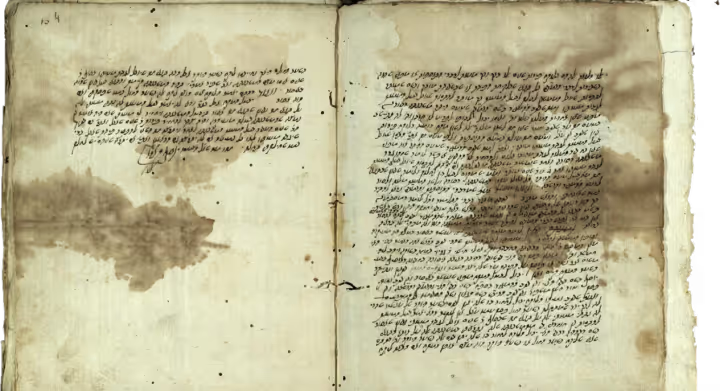
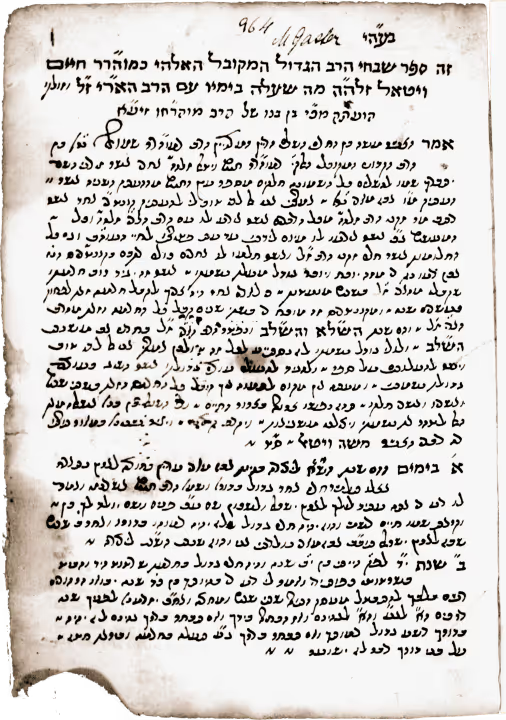
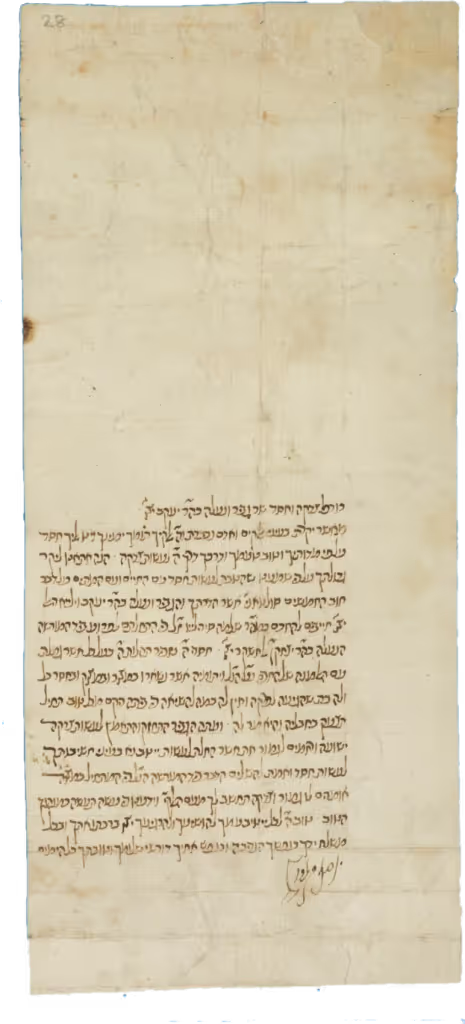
No manuscripts on the mystical writings of the Ari exist. This is one of his letters sent while he was in Egypt in Kislev/December time before the arrival of the 'mightiness of rains'. It concerns trade and financial matters.
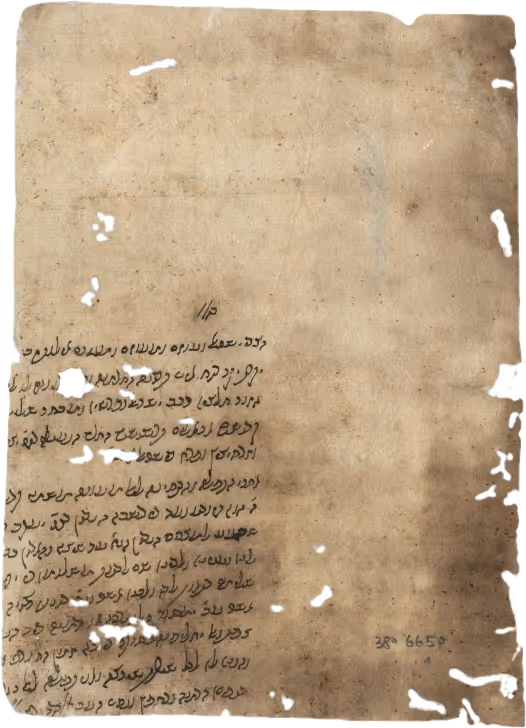
Fragment of a letter that was sent to the Ari during a period in which he lived in Egypt, asking to support the efforts of a fundraiser sent from Tsfat.
From the collection of the National Library of Israel, “Ktiv” Project.

The Ashkenazi Synagogue of the Ari in Tsfat.
Photo: Eliezer Lange
Overview
Yitzchak Luria (1534-1572), born in Jerusalem and moved to Tsfat in the Land of Israel in 1570, revolutionized the study of Jewish mysticism through Kabbalah.
The Ari's system transformed earlier Kabbalah into a dynamic, historical, and deeply mystical framework that became the foundation and guide to Jewish mysticism and Kabbalistic traditions.
Yitzchak Luria believed widespread dissemination of Kabbalah would hasten the Messianic event, especially after the expulsions of the Jews from Spain in 1492 and Portugal in 1497.
In the Bible

Life lessons

Humor

Advocacy

Fun fact

Antisimetism