The Elijah Synagogue
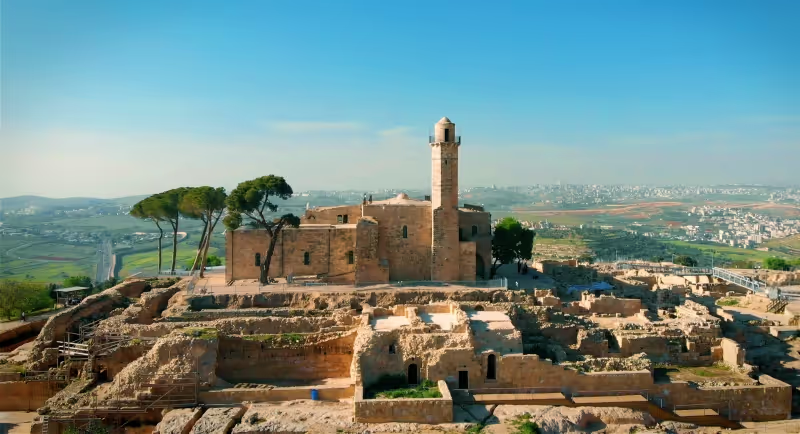
Due to noise complaints, the Ottoman government closed the Ramban Synagogue in 1586, which had been a place of Jewish worship for 320 years, because it shared a wall with a mosque.
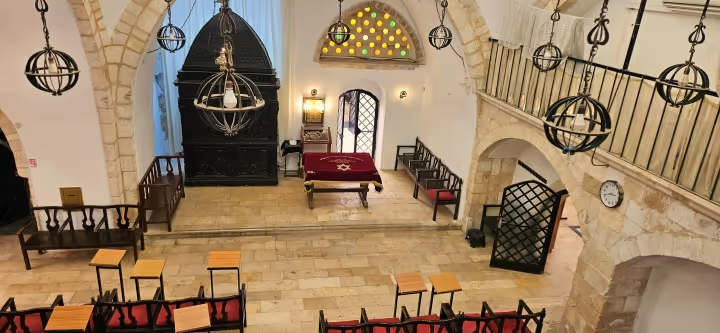
In the same year, a new synagogue was established in the Jewish quarter named after Elijah the Prophet. The Eliyahu Ha'navi Synagogue primarily served as a beit midrash for Torah study and was used for prayer only on festivals. Three other synagogues followed in the same vicinity during the 17th and 18th centuries, collectively known as the "Four Sephardi Synagogues".
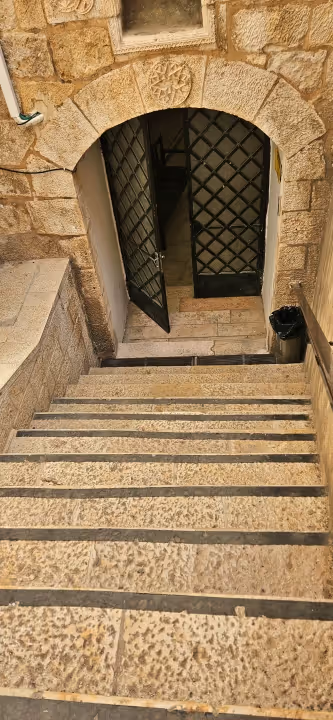
All four synagogues are subterranean, as Jewish synagogues were not allowed to be on the same level as Muslim Mosques.

Overview
In 1586, the Ottoman authorities shut down the Ramban (Nachmanides) Synagogue after complaints from worshippers at the adjoining mosque, whose wall was directly connected to the synagogue.
In the same year, a new synagogue was established in the Jewish quarter named after Elijah the Prophet, serving mainly as a beit midrash. Three other synagogues followed in the 17th and 18th centuries, collectively known as the "Four Sephardi Synagogues".
All four synagogues are subterranean as Jewish synagogues were not allowed to be on the same level as Muslim Mosques.
In the Bible

Life lessons

Humor

Advocacy

Fun fact

Antisimetism